SICILIAN CASSATA and some Background (perfect for an Australian Christmas)

The background for many of Sicily’s most celebrated sweets, including cassata and marzipan, were refined in convent kitchens. From Palermo’s Martorana to monasteries in Catania and Agrigento, nuns developed elaborate almond and ricotta desserts for religious feasts and aristocratic patrons, leaving a lasting legacy in Sicilian pastry traditions.

In this post I wish to provide more information about the important role of nuns in Sicilian Convents.

18th-19th century basilica in Noto – Benedictine nuns lived in a cloistered convent next to the basilica.
Ricotta, as is still sold in some parts of Sicily.

Convent Traditions: Nuns and the Art of Sicilian Sweets

The refinement of many Sicilian desserts owes much to the nuns of the island’s convents, particularly from the late Middle Ages through the 18th and 19th centuries. Within the cloistered life of these religious communities, convent kitchens became places of remarkable culinary creativity. Nuns prepared elaborate sweets for major religious celebrations — especially Easter, Christmas and the feasts of patron saints — and over time developed a reputation for producing some of the most refined pastries in Sicily.

Many convents supported themselves financially through the sale of sweets made within their walls. These desserts were often sold through small windows or ruote (turning wooden wheels) that allowed goods to be passed outside without the nuns breaking their enclosure. The sweets soon became sought after by local aristocratic families and wealthy households, who ordered them for weddings, baptisms and feast days.

The ingredients used reflected Sicily’s agricultural wealth and its Arab culinary legacy: almonds, sugar, citrus peel, candied fruits and ricotta. Almond paste, known as pasta reale or marzipan, was especially important.

One of the most famous examples comes from Palermo, where the Benedictine nuns of the Convent of Santa Maria dell’Ammiraglio, commonly known as La Martorana, became renowned for shaping coloured marzipan into extraordinarily realistic fruits and vegetables. These sweets, called frutta martorana, were originally prepared for the Feast of All Saints but later became one of Sicily’s most recognisable confectionery traditions.

In Catania, convent pastry traditions also flourished. The Benedictine nuns of the Monastero dei Benedettini di San Nicolò l’Arena, one of the largest Benedictine monasteries in Europe, were known for preparing elaborate sweets for religious festivals and aristocratic patrons. Catania’s rich convent pastry tradition later contributed to famous desserts such as minne di Sant’Agata, small ricotta-filled cakes created in honour of the city’s patron saint.

Further south, in Agrigento, the nuns of convents such as the Monastero di Santo Spirito became celebrated for their almond-based sweets. Their pastries, including delicate almond biscuits and marzipan confections, were closely linked to local almond cultivation and to the Arab-influenced techniques that had shaped Sicilian confectionery for centuries.

Convent kitchens also played an important role in refining the appearance of cassata Siciliana. Through careful layering of sponge cake, sweetened ricotta and candied fruits, and by covering the cake with marzipan and icing, the nuns helped transform what may once have been a simpler ricotta dessert into the richly decorated cassata associated with Sicilian celebrations today.

Although many convents have since closed, their influence remains deeply embedded in Sicily’s pastry traditions. Numerous classic sweets — including cassata, marzipan fruits and other almond-based confections — still carry the unmistakable legacy of convent pastry making, where devotion, patience and artistry were expressed through sugar and almonds.

 The contribution of the monsù

The pastry traditions of Sicilian convents later intersected with the work of the monsù, the French-trained chefs employed in aristocratic households from the eighteenth century onwards. While the nuns preserved and developed many almond- and ricotta-based sweets within convent kitchens, the monsù refined and elaborated these traditions, introducing greater technical sophistication and decorative flourish that helped shape the elaborate cassata and marzipan desserts recognised today.

SICILIAN CASSATA and MARZIPAN AT EASTER (Food and Culture in Sicily, La Trobe University)

CASSATA (It is perfect for an Australian Christmas)

MARZAPANE also called Pasta Reale (Marzipan)

CASSATA ( Post no. 2) Calls for a celebration!!!

Below are some photos of Cassata – from ornate versions to my home made versions:
OLYMPUS DIGITAL CAMERA
Cassata, simple fondant decoration.
cassata P1020058
Cassata made at home.
Cassata 2
Cassata made at home decorated with Marzipan fruit.
Cassata slice
Cassata slice.
Homemade cassata,
Homemade Cassata,

JEWELS OF SICILY: A celebration of SPRING

Spring in Sicily is welcomed ‘big time’ and spring produce is embraced.

Marisa prepares artichoke 1

Sicilians make a fuss about the preparation and eating of seasonal spring produce: asparagus, artichokes, broad beans, fennel and ricotta. It is the time when the island comes alive – flowers bloom, vines sprout and vegetables ripen.

Pasta and greens with wine

The menu at Waratah Hills Vineyard  was a celebration of Spring, and all who attended the class enjoyed all of that produce and the occasion in such a beautiful vineyard.

Garfish fillets

We ate local garfish rolled around a Sicilian stuffing (commonly used for sardines called Beccafico),  stuffed artichokes and a pasta with a dressing made from sautéed spring vegetables, moistened with wine and stock and topped with nutmeg and creamy ricotta.

Carlo and Peter watch Marisa add stock

We drank excellent, matching wines with each course and used local, extra virgin olive oil made by Judy and Neil’s (proprietors of Waratah Hills Vineyard and organizers of this event) neighbours .

Beccafico

Cassata  of course was the final culinary jewel; I coated it with not-too-sweet marzipan…..and I have my tongue out in anticipation…(I do not know what I was saying!)

Marisa talks about cassata

A few dressed Sicilian Green olives at the start did not go astray (garlic, orange rind,  chilli flakes, wild fennel fronds, bay leaves, extra virgin olive oil) and a fennel and orange salad as a palate cleanser eaten after the fish was a good choice .

Marisa cooking fritedda close up

Thank you to all those eager and friendly people who made the event a success.

Judy and Marisa talking food

Waratah Hills Vineyard Wines:

http://waratahhills.com.au/buy-online/


APPLE STRUDEL (TRIESTE: Strucolo de pomi)
This is a recipe for an apple strudel as made in Trieste. Unlike the very thin pastry common in the Austrian strudel and other European countries that once belonged to the Austrian- Hungarian empire, the pastry in a Triestine strudel is not as thin and therefore easier to roll.

Cooked strudel cut 2

Autumn is a good time for apple desserts and I was asked recently about suitable food to take on a picnic. This apple strudel is nice to eat hot or cold and the pastry does not go soggy.

With Easter coming up and apples been so abundant, a Strucolo de pomi could be the go.

FullSizeRender

I have written about Strucolo before and as a child it was my job to prepare the apples. Here is the link to the recipe:

STRUCOLO DE POMI (Apple strudel as made in Trieste).


EASTER (Pasqua) in Sicily

Easter (Pasqua) is a significant religious celebration in Sicily, also associated with the arrival of spring.

As a predominantly Catholic country, religious observances in certain regions may extend beyond the Easter weekend. Sicily, in particular, is renowned for its rituals and traditions, with processions and solemn religious ceremonies held throughout the weeks preceding Easter Sunday.

I was in Enna on the Sunday following Easter, which is known as ‘Albis’. 

I witnessed the procession, which comprised all-male groups of various ages and sodalities or confraternities from different churches or fellowships. The procession travelled from Piazza Mazzini to the nearby Lombard castle in Enna.

St-Js-parade-Enna-2-300x198

From this point, the priest blessed the fields. The followers in the Procession held Professional Banners  paired with statues of the Holy Trinity, Father, Son and Holy Ghost.

God The Father could also have been Saint Joseph . The association  is understandable, as he is also linked to drought and fava beans (broad beans) and the blessing of crops to prevent famine.

St-Js-parade_enna-fraternity-852x5641-300x198 2 St-Js-parade-Enna-2-300x198

OTHER LINKS AND EASTER RECIPES:

Easter Monday is called Pasquetta (small Easter). Being Spring, this is a popular time to enjoy the countryside and eating food outdoors, perhaps with a picnic or travelling to a nearby country restaurant and dining al fresco in the Spring sunshine (once again to celebrate the season).

Here are links to some of the traditional dishes eaten over Easter in Sicily:

Savoury Pastries
Niluzza-rolls-pasta_0002-446x300
My aunt in Ragusa rolling pastry.

SCACCE (focaccia-like stuffed bread)

SCACCE and PIZZA and SICILIAN EASTER

• ‘MPANATA (A lamb pie, Easter treat)

• EASTER IN SICILY – A SICILIAN FEAST IN RAGUSA – Recipes and Giuggiulena

• PASQUA in Sicilia – EASTER IN SICILY (post 2)

Cassata-slice-896x600

CASSATA and other “cose dolci” (sweet things in Italian)

• CASSATA (It is perfect for an Australian Christmas)

• SICILIAN CASSATA and MARZIPAN AT EASTER (Food and Culture in Sicily, La Trobe University)

• CASSATA DECONSTRUCTED – a postmodernist take on Sicilian Cassata

EASTER SICILIAN SPECIALTIES …. Cuddura cù ll’ova, Pecorelle Pasquali

• CASSATA (Post no. 2) Calls for a celebration!!!

• PASTA DI MANDORLA (Marzipan, the traditional recipe)


ST JOSEPH’S DAY IN SICILY: SFINCI AND CRISPEDDI DI RISU

Saint Joseph’s Day in Sicily (Festa di San Giuseppe) is celebrated on 19 March with religious traditions, elaborate displays of food and an abundance of sweets, particularly sfinci and crispeddi di risu (Sicilian rice fritters).

san-giuseppe-188x250
A statue of Saint Joseph, a common sight in Churches

Throughout Italy, the feast also coincides with Father’s Day (La Festa del Papà), honouring Saint Joseph as the father figure of the Holy Family.

In southern Italy, saints’ name days have traditionally held particular significance. My father, who was born in Ragusa but lived in Trieste, always received telephone calls from his relatives in Sicily wishing him auguri on 19 March.

st joseph

Saint Joseph, Spring and Sicilian Food Traditions

Saint Joseph, traditionally regarded as a humble carpenter who cared for Mary and Jesus, is the patron saint of fathers, workers, carpenters and the poor. Interestingly, he is also associated with pastry cooks.

The connection becomes clearer when we consider the food traditions surrounding his feast day in Sicily.

Although Saint Joseph’s Day falls during Lent, traditionally a period of fasting and abstinence, it also coincides with the approach of spring and the renewal of agricultural life.

Long before Christianity, Mediterranean communities celebrated the changing seasons with rituals associated with fertility, regeneration and abundance.

Grains, seeds and legumes symbolised new life, and these ancient associations remain evident in Sicilian celebrations.

La Tavola di San Giuseppe: Saint Joseph’s Table

In many Sicilian communities, elaborate food displays known as La Tavola di San Giuseppe (Saint Joseph’s Table) are prepared to celebrate the feast.

Festive breads in a La Tavola di San Giuseppe in southern Sicily

Wheat (grains, seeds and legumes) were considered the metaphorical seeds of life and through germination and regeneration they invoke the powers of fertility. Decorative breads, often shaped into symbolic forms are sprinkled with seeds and occupy a prominent position alongside vegetables, legumes and traditional sweets.

Historically, these tables expressed gratitude for the harvest and provided food for the poor. Today, they continue to represent generosity, hospitality and community.

Sfinci and Crispeddi di Risu: Traditional Sicilian Sweets

Fried sweets are an essential part of Saint Joseph’s Day celebrations in Sicily.

Two particularly popular varieties are sfinci, made primarily with flour, and crispeddi di risu, prepared with cooked rice.

As with so many Sicilian dishes, recipes vary considerably between regions, towns and families.

Sfinci di San Giuseppe are especially associated with western Sicily, particularly Palermo, where they are often filled or topped with sweetened ricotta cream.

Simpler versions of sfinci are also prepared elsewhere on the island, sometimes with custard or without any filling.

Crispeddi di risu, also known as zeppole di riso, are particularly popular in eastern Sicily, including Messina, Catania and Syracuse.

These golden rice fritters are traditionally flavoured with citrus zest and finished with honey or sugar and cinnamon.

Two Traditional Sicilian Rice Fritter Recipes

I have selected two recipes from respected Sicilian cookbooks.

The first comes from Maria Consoli Sardo’s Cucina Nostra (1978), a book I particularly appreciate for its uncomplicated, traditional recipes.

Her preparations often reflect cucina povera, the resourceful cooking associated with rural Sicilian households, where inexpensive ingredients were transformed into satisfying dishes.

The second recipe is adapted from Giuseppe Coria’s Profumi di Sicilia: Il Libro della Cucina Siciliana.

Both recipes use rice, milk and flour, but their methods differ. The first contains no yeast, while the second relies on yeast to produce a lighter fritter.

Sfinci-2-465x252
The Crispeddi di risu, traditional Sicilian rice fritters I made
Recipe 1: Sfinci di Risu – Traditional Sicilian Rice Fritters

Adapted from Maria Consoli Sardo, Cucina Nostra (1978)

This is a particularly simple preparation, requiring only a few ingredients. The cooked rice rests overnight before being combined with flour, shaped into batons and fried.

Ingredients

  • 200 g Arborio rice
  • 500 ml water
  • 500 ml milk
  • 200 g plain flour
  • A pinch of salt
  • Lard or extra virgin olive oil for frying
  • Sugar and ground cinnamon for serving

My variation: Chestnut honey and cinnamon instead of sugar.

Method

  1. Bring the water to the boil, add a pinch of salt and the rice.
  2. Cook until the rice is approximately halfway done, then add the milk.
  3. Continue cooking gently, stirring occasionally, until the rice is tender and has absorbed most of the liquid. The consistency should resemble a thick risotto.
  4. Transfer the cooked rice to a bowl, allow it to cool and refrigerate for approximately 24 hours.
  5. Add the flour and mix thoroughly to form a firm mixture.
  6. Spread the mixture onto a lightly floured work surface and leave it to rest for approximately two hours.
  7. Cut into short batons.
  8. Heat the frying fat in a deep pan and fry the batons in batches until golden and crisp.
  9. Drain on absorbent paper.
  10. Sprinkle with sugar and cinnamon while still warm.

My Variation: Honey and Cinnamon

I fried my sfinci di risu in extra virgin olive oil rather than lard.

Instead of the traditional sugar coating, I drizzled them with chestnut honey and sprinkled them with cinnamon.

I usually have Sicilian orange blossom honey in my pantry, but I had run out. The chestnut honey, with its distinctive, slightly bitter flavour, proved an excellent alternative.

Honey 1
My jar of Chestnut Honey
Recipe 2: Crispeddi di Risu – Sicilian Rice Fritters with Yeast

Adapted from Giuseppe Coria, Profumi di Sicilia: Il Libro della Cucina Siciliana

Giuseppe Coria’s recipe includes yeast and grated citrus zest, producing fragrant rice fritters with a different texture from the previous version.

Judging by the quantities, Signor Coria must have been accustomed to cooking for large numbers!

The original recipe makes a substantial batch, so reduce the quantities if necessary.

Ingredients

  • 1 kg rice
  • 1 litre milk
  • 1 litre boiling water
  • ½ teaspoon salt
  • 2 tablespoons sugar
  • 500 g plain flour
  • 150 g fresh yeast, dissolved in ½ cup lukewarm water (see note)
  • Finely grated zest of 2 oranges
  • Finely grated zest of 2 lemons
  • Oil for deep-frying
  • Honey and ground cinnamon for serving

Note: The quantity of fresh yeast is unusually high by modern standards. It is reproduced from the original recipe and is worth checking before preparation. If using dried yeast, adjust the quantity appropriately rather than substituting it directly.

Method

  1. Combine the milk and water in a large saucepan. Add the salt, sugar and rice.
  2. Bring to the boil, reduce the heat and simmer gently, stirring occasionally.
  3. Continue cooking until the rice is tender and has absorbed the liquid, resembling a thick risotto.
  4. Allow the mixture to cool until lukewarm.
  5. Stir in the flour, dissolved yeast and grated citrus zest.
  6. Mix thoroughly, cover and leave to rise for approximately 2–4 hours.
  7. Heat the oil in a deep frying pan.
  8. Using a spoon, shape portions of the rice mixture and carefully slide them into the hot oil.
  9. Fry in batches until golden.
  10. Drain briefly on absorbent paper.
  11. Drizzle with honey and sprinkle with cinnamon.

Serve warm.

A Sicilian Tradition Worth Preserving

Saint Joseph’s Day is another example of how Sicilian food traditions connect religious celebrations with much older agricultural customs.

The decorative breads, communal tables and simple fried sweets express generosity, renewal and the importance of sharing food.

Whether called sfinci di risu, crispeddi or zeppole di riso, these traditional fritters demonstrate the ingenuity of Sicilian cooking: a handful of everyday ingredients transformed into something special.

Italy double dips and combines this ancient and religious tradition of Saint Joseph (19 March) with Father’s Day – La Festa del Papà – the feast (celebration) for father, the event imported from America in the early 20th century. In the USA it is held on the third Sunday of June.

FESTA DI SAN GIUSEPPE (SAINT JOSEPH) and sweets called Sfinci di San Giuseppe

SAINT JOSEPH’S FEAST DAY (La Festa di San Giuseppe) 19 March

VANILLE KIPFERL or CHIFELETTI as called in Trieste

My friend called them Vanille Kipferl, I recognised them instantly as Chifeletti (‘ch’ sound is pronounced as k in Italian and ‘letti’ at the end of words in Italian means small.). Same recipe, different name. But it is not surprising that we share the same recipe – my friend is from Vienna and I came from Trieste and both cities were part of the Austo- Hungarian empire.

DSC_0158

The Vanille Kipferl (or Chifeletti) are frail, crescent-shaped, little biscuits dusted with icing sugar. They are popular at Christmas time in Austria and together with her much-loved cherry cake they were my friend’s contribution to our shared Christmas eve dinner. I ate the last of the kipferl recently; they last well and the flavour is said to improve when stored well.

I have found slight variations in the different Triestine and Austrian recipes sighted, (for example some add egg yolks to the mixture), but the ratio of ingredients seems to be the same. In Trieste, rather than adding vanilla to the dough they use icing sugar that has been flavoured with vanilla beans.

DSC_0021

Chifeletti in Trieste are also called Lunette (small moons) or Curabiè, perhaps from Kourabiès, which are the Greek version of these biscuits. Interestingly enough there is an eastern Greek Community in Trieste and when visiting this very pleasant Italian city, it is worth seeing the Greek Orthodox church – Church of Saint Nicolò. There is also a Serbian – Orthodox church called San Spiridione, but this is another story and very telling of the historical culture and racial mix in Trieste’s population.

DSC_6162-640x4231

In my mother’s pantry, the jar used to store her icing sugar always had vanilla beans buried in it. Vanilla infused icing sugar for dusting is optional but if you want the real deal: Place vanilla beans in a jar of icing sugar, seal it and leave it for at least a week.

300g plain flour
250g butter
80g sugar
100g finely ground almonds
vanilla (a little paste or essence)
1 pinch salt
icing sugar for dusting

Rub the butter into the flour, sugar, ground almonds and salt and form it into dough.  Shape the dough into a ball, cover it with plastic film and leave it in the fridge for a couple of hours.

Divide and shape the dough into finger thick long rolls and cut each roll into 2 cm pieces. Curve each small piece of dough into small moon shapes.

Place the biscuits on a baking tray lined with baking paper and bake in a pre-heated oven at 150°C for 10-15 minutes (They should be pale golden in colour and must not brown).

Remove them carefully from the oven and from the baking tray and when they are still warm dust them with plenty of icing sugar (vanilla flavoured).

When they are cold store them carefully in layers, in a tin with plenty of icing sugar.

The photo of my friend’s Cherry cake is below. As you can see, the batter is like pastry and there are many cherries in the centre.

DSC_6174

P.S.

Other pastries also called  Chifeletti  popular in Trieste are made with potato dough. These are fried and then rolled in sugar; my mother and Triestine aunts used to make these with the same dough as gnocchi…..gnocchi for lunch, followed by Chifeletti made with some left over dough.


VINCOTTO – its uses and is it another fad?

Vincotto+232

Do not assume that as an Italian I use Vincotto. I knew about grape “must” but not Vincotto and I wonder if Italians in Italy are using it and promoting it as widely as it seems to be in Australia.

You may have noticed bottles of Vincotto are appearing in gourmet delicatessens and Italian produce stores. Like Balsamic vinegar took over Australian produce stores a few years ago or Verjuice, Vincotto seems to be the new secret ingredient.

Literally translated it means “cooked wine” – and I am not talking about what my father used to make for me when I had a cold, boiled red wine with spices served hot. We called it vin brulé (Italian term for mulled wine).

The popular brand for Vincotto seems to be manufactured by a Gianni Calogiuri. It claims to be an ancient traditional recipe from the Italian region of Puglia, the heel in south-eastern Italy. The Vincotto is produces in Lizzanello (Lecce).

Vincotto is made from grape must (containing the skins, seeds and small stems of the withered, partly dried grapes from Malvasia and Negroamaro variety). These are cooked and reduced, blended and aged in oak barrels.  Like balsamic vinegar, the good stuff is aged for a number of years.

If made in Australia, Vincotto is made from a ‘must’ from Australian shiraz grapes. This is combined with high quality red wine vinegar and slowly reduced over many hours.

My first bottle of Vincotto was the Originale (original flavour). It has a sweet and sour taste and like a good quality wine vinegar so I used it in salad dressings and to de-glaze pans.

But now I am seeing many different flavoured bottles of Vincotto and I am finding it all very confusing.

At one of the specialised Italian produce stores I was given a “Carob Sweet Vinegar” and a Lemon Velvety Condiment” to try. The one made with carob suggests using it with carpaccio, fish, dried fruits and sorbets. The lemon one suggests to use it with fish, ice cream, desserts and cocktails. Thank you Enoteca Sileno.

I have two other different ones, both gifts from different friends on different occasions. I have a “Fig Vincotto Vinegar” and
“Lamponi (raspberry) condimento agrodolce”. Both of these have the statement on the label that they contain no added sugars. The one made with figs suggests: “Use it on meats, fish, soups, cheese and desserts”. The raspberry one: “excellent on meats, salads, sorbets, fruit and ice cream”. Thank you dear friends.

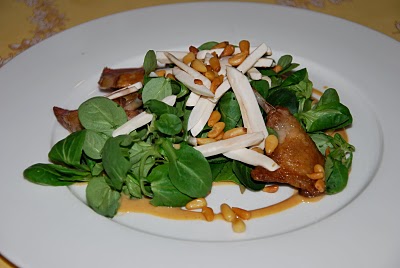
I am none the wiser by the suggestions made by the manufacturers, but I am especially enjoying the raspberry and the fig varieties in salad dressings – for example raspberry vinegar has been a common ingredient in English salads (I used to make it once!). I often add fruit or nuts, meats, fish or cheese to my leaf salads or I often combine roasted vegetables together so when I say “salads”, I am talking about composite salads. See:

Salade Composee
Composite salads.

DSC_0123

I like using Vincotto instead of wine or I combine it with wine when I de-glaze the cooking juices and food particles in the bottom of pans, especially those where I have cooked meat  – game meats especially. Last night I was pan frying some fish with bay leaves, saffron and caper berries and I de-glazed the pan with a mixture of white wine and about 1 tablespoon of lemon Vincotto. I am getting more adventurous and do not think that just because it is an Italian product that all Italians use it.

Albacore+rounds+dished+%231@125-250x250


I can see me roasting figs, apricots, plums or quinces with a splash of Vincotto and maybe presenting the fruit with cheeses and nuts. I cannot see me using it in ice cream or sorbets – this may come later.

Vincotto is also very similar to the middle-eastern Pomegranate molasses (thick, fragrant and a tangy reduction of pomegranate juice, boiled to a sticky, syrupy consistency). Over time I have used the molasses very successfully by experimenting and not just with middle-eastern ingredients. I guess that I will gradually begin to use Vincotto in similar ways but then again, it may be yet be just another passing fad.
MA2SBAE8REVW

MARMELLATA DI AGRUMI CON MIELE (Citrus jam or marmalade made with honey)

Marmellata di Agrumi con Miele begins with Sicily’s most iconic ingredient: citrus. Sicily is the land of citrus, and its fragrant lemons, oranges, tangellos, and Seville oranges have shaped both the savoury and sweet traditions of the island.

I love using honey and often replace sugar with it in jams and desserts. I also enjoy adding a splash of liqueur—Grand Marnier or Cointreau—to deepen the citrus notes. I frequently use good, not-too-sweet jams as a base for dessert sauces to accompany cakes, crêpes, fruit salads, and puddings. This time, however, I wanted a strong tasting, bright, citrus jam to use in an ancient Sicilian dessert.


And there it is:

Ingredients

4 citrus fruits (I used 1 lemon, 1 Seville orange, 1 tangello, 1 orange)

2 cups water

½–¾ cup honey (to taste)

Method

Remove some peel from the tangello and slice it very thinly.

Peel all citrus, removing and discarding the white pith.

Roughly chop the fruit and discard all seeds—they will make the jam bitter.

Place the fruit pulp and water in a saucepan. Cover, bring to the boil, then reduce the heat and simmer for 20 minutes.

Add the honey and boil uncovered, without stirring, for about 20 minutes or until the mixture reaches a semisolid set.

If you wish to add liqueur, stir in 1–2 tablespoons near the end of cooking.

**For a dessert sauce rather than a jam, loosen the mixture with a little extra liqueur.

LEMON MARMALADE TO USE IN SICILIAN PASTRIES. Conserva/ Marmellata di Limone (o di Cedro).

STUFFED DATES (With marzipan or nougat)

Believe it or not but some people can do without dessert and I am one of them. This could be a reflection of the way I was bought up –as an Italian child there was always fresh fruit after any meal and very special desserts were saved for special occasions. I think that they were appreciated more because of this.

I generally prefer to eat savoury food. However I do like something small and sweet at the end of a meal, especially if I have been drinking.

Nougatsquares2-300x198

I had some left over marzipan in the fridge, some left over torrone (nougat) and I saw some fresh, Medjool dates and hence this recipe for the stuffed dates. Easy to make too.

I knew that orange flower water and/or cinnamon are traditionally included in the marzipan mixture in Morocco where stuffed dates are popular (I have eaten them in Tunis and Turkey as well). My marzipan was left over from making a cassata so I added more almond meal and some orange flower water to the mixture, and presto the stuffing was ready. Grated peel from 1 orange can also enhance the flavour. In these other countries the marzipan is often coloured but I prefer natural colours and flavours. This time I did not use cinnamon, but maybe next time.

IMG_2509

There were four of us and I thought that twelve dates would be enough. Six were stuffed with almond paste and I stuffed the other six with a piece of nougat/ torrone (no instructions needed – it is self explanatory).

INGREDIENTS
blanched almonds to decorate.
fresh Medjool dates
marzipan

This amount of marzipan will easily stuff 24 dates. Either halve the ingredients or store the left over marzipan in the fridge till next time. Wrap it in plastic film and it will keep for a couple of weeks.

To make marzipan:
1 cup of ground almonds (blanched) and 1 cups of pure icing sugar combined with ¼ cup of caster sugar – this adds the crunchy texture that compliments the ground almonds.
Mix the sugars and almond meal with fingers and add 1 tablespoon of orange water slowly. If the mixture is too wet add more almonds. Knead it and if it needs more water add a little tap water to make the mixture pliable.

PROCESSES
Cut each date vertically on one side and remove the stone.
Make small cylinders of almond paste the same length as the dates and place one inside each date. Squeeze the sides of each date around the paste and leave some exposed.
Decorate each with a blanched almond (or walnut or pistachio).
Store in an airtight container in the fridge.
Take them out of the fridge about an hour before serving.

Marzipan: Also see previous posts:

SICILIAN CASSATA and MARZIPAN AT EASTER

CASSATA DECONSTRUCTED – a postmodernist take on Sicilian Cassata

PASTA DI MANDORLA (Marzipan, the traditional recipe)

MARZAPANE also called PASTA REALE (Marzipan)

MA2SBAE8REVW

ALMOND AND RICOTTA CAKE (Torta di mandorle e ricotta)

One of my friends made this cake and it is called a Rich Almond and Ricotta Cake.

IMG_2341

The recipe was a photocopy from a magazine of a couple of years ago. She has made the cake a few times and it has always been successful.

The cake is nice eaten on its own but just to remind us that it is winter, we enjoyed eating it like a dessert with warm stewed quinces and cream. With a cup of tea for morning or afternoon it is just as nice.

Because she decorated her cake with lavender from her garden we discussed how a lavender custard would also be an excellent accompaniment for this cake. I have included a recipe for this as well.

250g ricotta cheese
4 eggs, separated
1 tsp almond extract
175g caster sugar
250g almond meal
finely grated rind of 1 lime
1/4 cup flaked almonds
Icing sugar to dust
Preheat the oven to 150C
Beat together the ricotta, egg yolks, almond extract and sugar in an electric mixer until smooth. Stir in the almond meal and lime zest.
Whisk the egg whites in a clean, dry bowl until soft peaks. Fold 1/3 of the egg whites into the ricotta mixture to loosen, then fold in the remaining. Spread into the tin and bake for 35 minutes. Sprinkle with the almonds and bake for a further 10 minutes until golden and a skewer comes out clean.
Cool slightly, then turn on to a wire rack. Cool completely then dust with icing sugar to serve.

Lavender custard

2 cups milk
4 egg yolks
1/2 cup sugar
6 fresh lavender flowers, without stems
Beat the egg yolks and sugar until creamy. Heat the milk until small bubbles appear along the edges of the pan ( well before boiling point).
Pour a little of the egg mixture into the hot milk in the saucepan and whisk steadily. Keep on adding dribbles of the egg mixture slowly into the saucepan, and cook, stirring constantly until the mixture thickens.
Remove from the heat and add the lavender flowers. Pour the custard into a jug; place a piece of baking paper directly on the surface to prevent a skin from forming. Leave to steep in the fridge overnight. Remove the flowers before serving.


On the same weekend another friend gave me a present. She crocheted this extraordinary tea cosy for me. If only I had this fabulous creation when we ate our cake!

The Rich Almond and Ricotta Cake recipe reminded me of a different almond cake I used to make  – one of those flourless moist cakes that Claudia Roden made very popular and that has Sicilian flavours and ingredients. The almonds are toasted beforehand and then half of them are ground to a meal and the other half are coarsely ground before they are added to the cake mixture. This adds crunch as well as a more pronounced taste of almonds throughout the cake rather than just on top.

I am not saying that one cake is better than the other. They are both a variation on a theme. In Sicily the ricotta would be made from sheep’s milk – more delicate and sweeter.

Torta di Mandorle e Ricotta

Although it is called a torta (cake) it doubles up as being one of those moist desserts that I prefer to eat warm accompanied by some stewed winter or summer fruit or fresh strawberries. A dollop of cream does not go astray but this is not a common Italian custom.

250 grams of almonds
250 g ricotta, drained (the one sold in the tub is usually too moist and not suitable)
100 grams of sugar
4 eggs
finely grated rind of 1 lemon or orange

Blanch the almonds and then toast in the oven (160 degrees) till golden. Beat the ricotta and sugar, add  rind, the eggs one at a time then mix in the almonds. Mix everything well. Pour into a cake pan lined with baking paper and bake at 160 C  for 45 minutes. Serve it warm.

MA2SBAE8REVW