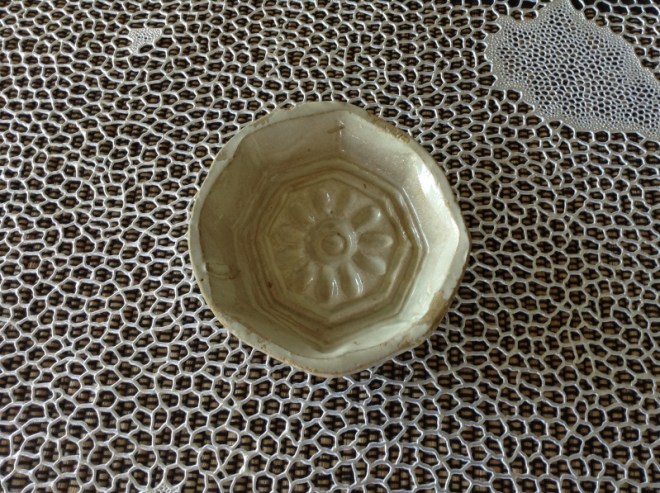
PETRAFENNULA also called PETRAMENNULA, a Sicilian sweet with possible Arabic origins

IMG_2481-800x598

Shelves are being stacked with Christmas sweet goodies at Dolcetti. There will be plenty more delectable and interesting sweets to come. Many of her sweets will have Sicilian origins.

IMG_2476-800x598Dolcetti is now open from Wednesday to Sunday in December

One of the things that I really like about Marianna (the pastry chef and owner of Dolcetti) is that she is willing to make new sweets and be creative; I like trying new things. Today I was offered a taste of this:

IMG_2479

I liked it and I hope that she will go ahead with adding this sweet to her range of Christmas goodies. She may experiment with it more before she is satisfied with it.

I have written about petrafennula, (also called petramennula depending on the Sicilian locality) a very long time ago in an earlier post called Arabs in Sicily, Some Sweets, Petrafennula. It is a Sicilian version of Croccante (brittle) or a Torrone.

It is a Christmas sweet like cubbaita or giuggiulena/ jujiulena (can be spelled different ways).

My recipe is made with almonds. Hers may not be called Petrafennula; there are many variations for making this sweet.
Marianna has used a selection of nuts: hazelnuts, pistachio, almonds and sultanas in hers – great stuff.

Arabs in Sicily, Some Sweets – Petrafennula

PETRAFENNULA – PIETRA DI MIELE (Rock made of honey).

INGREDIENTS
honey 1kg,
almonds, 500g blanched and roughly chopped into large pieces
candied orange peel, 400 g chopped finely,
cinnamon, ½ teaspoon (optional).

PROCESSES
Place the honey in a saucepan.
Add the peel.
Allow the mixture to simmer gently and stir from time to time until it begins to solidify.
Take the mixture off the stove and work quickly
Add the almonds and the cinnamon and stir gently to incorporate.
Pour the mixture on to baking paper placed on a cold surface – such as a marble slab or a baking tray (traditionally this is done without paper on an oiled marble slab).
Break it into pieces when it is cold. When my mother made this, she sometimes used to drop dollops of the mixture (about a tablespoon in size) on to a cold surface to form small odd shapes – more like pebbles than sharp rocks. This seemed easier than shaping it into one large slab, which then needs to be broken into smaller pieces.

Marianna-and-the-fruit-mince-mixers-800x586

I have been writing for a long time and there are plenty of Christmas sweet recipes on this blog.

Giuggiulena (also Cubbaita) – A Brittle Sicilian Toffee of Sugar and Honey with Sesame Seeds and Almonds

Christmas at Dolcetti in 2014 (and Recipe for Spicchiteddi – Sicilian Biscuits)

Christmas Dolci and Dolcetti and Pistachio Shortbread Biscuits 2013

Also:

Panettone and Panforte for an Italian Christmas

Sicilian Cassata and Some Background (perfect for an Australian Christmas)

I will visit Dolcetti once again and soon.

PIZZA DI NATALE, Christmas Pizza from Le Marche

italian-oven

How would you like a wood oven like this in your back garden?

My son sent me this photo. He found it in the house across the road from where he lives; the house was up for sale and he took a peak during one of the open inspections. And there it was!

I can imagine the range of goodies that have been cooked in that oven over the last 20 years.

Once the oven is fired up the heat would be utilized till the end.

IMG_1270-800x800

High heat is required for the wood fired bread (enough for the week and perhaps one or two relatives) and plenty of pizzas for the the weekly occasion when the extended family visits.

IMG_1272-800x603

And some for the grand kids’ school lunches.

IMG_1811-2-800x800

Heat would not have been wasted. After the baking of the food that requires high heat, there may be some trays of biscuits that require moderate heat and then the oven would be utilized to slowly roast trays of meat or perhaps to finish off drying trays of dried tomatoes or left over bread to make into breadcrumbs.

My experiences of an Italian Christmas are limited to Sicily (with my grandparents) and Trieste (where I lived as a child) and with Christmas coming up I have been thinking about traditional food in other parts of Italy. If the people who lived in the house with the wood fired oven were from the eastern side of a central region of Italy called Le Marche, they may be preparing to make a traditional fruit and nut bread for Christmas.

Natale is the Italian word for Christmas and the fruit and nut bread the Marchigiani make is called a Pizza di Natale or a Pizza Natalizia; it is not a pizza, but because a pizza dough (same as a bread dough) is used for the basis of this traditional fruit bread, it is referred to as a pizza.

The following mixture will make two pizzas.  The dough needs to rise for 6-8 hours so it would be preferable to mix it the day before you intend to bake it.As for the shape, you can divide the dough into two and shape it into two round loaves or each half placed into cake tins – preferably those with tall sides or with a hole in the middle (the shape will be called a ciambella).

IMG_2450-e1448339034492-800x800

PIZZA DOUGH

You can make pizza dough using your favourite recipe or buy ready made dough or use this recipe:

Ingredients:
1 kg strong white flour,1 level tablespoon fine sea salt,1 tablespoon sugar, approx 650ml (3 cups) lukewarm water, 4 tablespoons extra virgin olive oil, 2 sachets of dry yeast – one sachet or one envelope weighs 7 grams (2 teaspoons).

Mix the yeast, sugar into water and stir well and set aside while you prepare the flour. Mix the flour and salt into a large bowl, make a hole in the middle, pour the yeast mixture into the hole. Use your hands and knead the mixture to form a dough. You may need to add a little more flour if the mixture is too wet or more water if it is too dry. Knead it until you have a smooth dough. Place the dough back into the bowl and cover it with plastic wrapping or a tea towel.  Leave in a warm room until the dough has doubled in size – about an hour. Add the oil and knead it again.

Xmas-baubles-800x529

PIZZA DI NATALE

Mix together: 500 gr walnuts (broken up into large bits), 200g raisins, 200g dried figs (chopped), 100g of citrus peel, black ground pepper and nutmeg to taste (I like it spicy), 350g sugar and grated rind of 1 lemon and 1orange.

Juice of the orange and lemon to add to the mixture when you combine the dough with the fruit and nut mixture in case it is too dry. Or splash some rum or orange flavoured liqueur to moisten the dough – alcohol is my preferred choice, but is not traditional.
Combine the dough with the fruit and nut mixture and knead well.
Divide the dough into two and shape into round loaves or place it into two tins -the dough needs room to rise so choose suitable tins.
Leave the Pizza Natalizia to rise for 6 hours or overnight.
Bake them in the oven at about 210°C for about 40-50 minutes.  Do the usual things that are done when baking, i.e. cover the tops with baking paper if the top is cooking too quickly, insert a skewer into the dough at the end of 40 minutes to see if it is cooked etc.
Store in cake tins or a couple of layers of foil till ready to slice.

Other posts about pizza- like Sicilian goodies

Scacce and Pizza and Sicilian Easter

Scacce (focaccia-like Stuffed Bread)

Sfincione

LONG LIVE ZUPPA INGLESE and its sisters

Zuppa Inglese continues to be an impressive dessert. It is especially perfect for those Spring and Summer lunches outdoors.

The secret ingredient is Alchermes. The delicate  flavours of the Savoiardi or Pavesi (sponge-finger biscuits) and the egg custard do help but it would not be Zuppa Inglese without  Alchermes is a highly alcoholic, Florentine liqueur, red in colour and specifically used for making Zuppa Inglese.


Post written 10/10/2010:

Zuppa Inglese

Zuppa Inglese copy

Post written 22/3/209:  Alchermes/ Alkermes

And, what I concocted from my knowledge and experiences of making  Zuppa Inglese and Cassata:

Cassata & strawbs 1

Post written 13/12/2012: Cassata Deconstructed – A Postmodernist Take on Sicilian Cassata

Alchermes is also good dribbled on a sponge cake.

IMG_4236

MILLEFOGLIE or Millefeuille and CREMA PASTICCIERA or crème pâtissière

Millefoglie – a thousand leaves – is better known in Australia perhaps by its French name, Millefeuille.

As you can see in the photo, a Millefoglie is a magnificent and very fancy looking cake (a grand- finale- dessert), made with layers (or leaves) of thin and airy, flaky pastry. This one has three layers of pastry and two of different creams: the top layer is Chantilly cream, the other as you may guess by its delicate, green colour is crema pasticciera and ground pistachios. Look at the top of the Millefoglie and you have some crushed pistachios and some fresh strawberries. And there you have it, whether it is incidental, the red, white and green are the colours of the Italian flag.

Both France and Italy have perfected many versions of this sweet. In Verona they make Millefoglie Strachin. This is layered with Crema soufflé and as the name suggests, it is a light and airy cream filling. Icing sugar  is usually sprinkled on top.

Cake-whole_0624-800x533

In Italy the Millefoglie is associated with celebrations, for example birthdays, baptisms and communions, weddings; the square shape makes it easy to cut into portions. The puff pastry is probably the most laborious to make and because it is usually a large cake it is customarily made by pastry chefs and bought from a Pasticceria.

Mine was a gift and it came from Marianna’s pastry shop called Dolcetti. I have written about Marianna’s sweets many times on my blog because I think that she is very talented and makes a great range of delectable sweets.

This Millefoglie looks stunning and tastes as good as it looks. I do not like over sweet desserts and I would describe this as being delicately sweet.

I will not give you Marianna’s recipe – this is her secret, but there are many do-able recipes on the web. For those of you who are not keen to make your own puff pastry there are good ones on the market

I did not have to look hard for a recipe on my bookshelves either. Those of you who are old enough to have Le Cordon Bleu or Raymond Oliver’s La Cuisine will find recipes for Millefeuille – for making the puff pastry, Chantilly cream and almond custard (not pistachio).

I also found a marvellous recipe in my copy of Grande Enciclopedia illustrata della gastronomia (Guarnaschelli Gotti).

There are many recipes for making crème pâtissière or crema pasticcera or pastry cream in books and magazines and on the web.

Here are two recipes from two belle dames of cuisine, one from Ada Boni and one from Julia Child.

See English – language version below the Italian.

Ada Boni’s crema pasticciera:

Per farcire una torta per 6 persone:

Zucchero in polvere, g. 90 (3 cucchiai colmi) – tuorli d’uovo, 3 – Farina, g. 75 (3 cucchiai) – Buccia di limone o vaniglina – Latte, l. 0,500 – Facoltativo: burro, quanto una noce.

Mettete in una casseruola lo zucchero e i rossi d’uovo. Mescolate con un cucchiaio di legno e aggiungete la farina e un pezzo di buccia di limone (evitando accuratamente la parte bianca) o un po’ di buccia di limone grattata, o una puntina di vaniglina. Mettete sul fuoco il latte e quando sarà quasi bollente versatelo a piccole quantità sulle uova, la farina e lo zucchero. mescolando e sciogliendo con una piccola frusta. Quando avrete aggiunto tutto il latte, togliete via la frusta e mettete la casseruola sul fuoco, mescolando continuamente col cucchiaio di legno. Vedrete che ben presto la crema si addenserà gradatamente. Continuate a mescolarla sempre e, raggiunta l’ebollizione, lasciate che la crema bolla per cinque minuti affinché possa perdere il sapore di farina. Appena tolta dal fuoco, se credete, aggiungeteci una noce di burro, ciò che le comunica una maggiore finezza. Mescolate ancora e mentre la crema si fredda non dimenticate di mescolarla di quando in quando per impedirle di fare la pellicola alla superficie.

Easy translation and interpretation of Ada Boni’s recipe:

3 egg yolks + 3 tbsp sugar + 3 tbs flour (I prefer to use corn flour) + 500ml milk.1 level tablespoon of butter, lemon peel, either grated or a thin shaving of the peel, vanilla extract (or 1 vanilla pod, halved lengthways and placed into the milk as it heats).

In a saucepan large enough to hold the milk place the 3 egg yolks with 3 tablespoons sugar and mix it with a wooden spoon until it is creamy. Gradually add 3 tablespoons flour and mix it again till it is smooth. Add a thin strip of lemon peel or grated lemon and or a little vanilla.

Heat 500ml of milk until it is nearly boiling. Pour the hot milk slowly into the egg mixture, stirring continuously and thoroughly so as to avoid lumps (I use a whisk).

Place the pan on the heat and simmer, stirring constantly for about 5 minutes, until the cream thickens. Take off the stove and add the butter. Keep on stirring from time to time as the cream cools so as to prevent a skin from forming.

My notes:

To prevent a skin from forming, what I do and that is to place a piece of baking paper or cling film on the surface. Leave the custard to cool and chill it before using. Omit the butter and instead you could whip about 150ml cream and fold a little at the time into the cold custard.

Julia Child’s crème pâtissière:

1 cup sugar

5 egg yolks

½ cup plain flour

2 cups boiling milk

1 tablepoon butter

1½ tablepoons vanilla extract

In a mixing bowl, gradually beat the sugar into the egg yolks and continue beating for 2–3 minutes, until the mixture is pale yellow and forms a ribbon.

Beat in the flour, then gradually pour the boiling milk in a thin stream of droplets, beating continually.

Pour the mixture into a heavy saucepan, and set it over moderately high heat. Using a wire whisk, stir continually, reaching all over the bottom of the pan.

As the sauce comes to a boil, it will get lumpy, but will smooth out as you beat it. Once the mixture comes to a boil, continue

beating over moderately low heat for 2–3 minutes to cook the flour; be careful not to scorch the bottom (regulate the heat down, and keep stirring!).

Remove from the heat, stir in the butter, and the vanilla.

Dolcetti window

Dolcetti is a Sicilian inspired pasticceria focused on bringing the tradition of sharing exquisite sweets with family and friends to Melbourne.

A few of the other posts on my blog about Dolcetti and Marianna:

Giugiulena

Christmas Dolci and Dolcetti and Pistachio Shortbread

Christmas at Dolcetti in 2014 (and Recipe for Spicchiteddi – Sicilian Biscuits)

Zeppole, Fried Sweets

Dolcetti is a Sicilian inspired pasticceria focused on bringing the tradition of sharing exquisite sweets with family and friends to Melbourne.

Marianna’s website: Dolcetti


APPLE CAKE FOR BREAKFAST – TORTA DI MELE


IMG_1551

Whenever I visit my relatives in Sicily they cannot do enough for me. They fuss and fuss over my well-being and happiness and like all Italians they are constantly preoccupied about food. For them, maintaining me in a blissful state has to include the constant preparation of food.

It is common for Italians in all parts of Italy to eat light cakes at breakfast and this light cake is a torta di mele (an apple cake). It was made by my cousin Franca who lives in Ragusa (in Sicily).

Cathedral in Ragusa in the photo below.

Ragusa Cathedral_180

Franca made this in front of me and surprisingly on this occasion and for my benefit she weighed the ingredients (a bit of a rarity in an Italian/Sicilian kitchen where everything is done by estimation and touch, sight and smell.

The milk was not measured, but it was a splash, as she described.

When one encounters an Italian recipe for making cakes, listed as one of the ingredients is likely to be a proportion or a whole bustina of lievito. This is the leavening agent and each bustina (small envelope or packet) weighs 16g. In English lievito is translated as yeast, but the leavening agent in these packs is baking powder.

Italians use the same word (lievito) for yeast and baking powder – both are leavening agents but the way that they differentiate between the baking powder and dried yeast is that the packet of baking powder is likely to include a picture of a cake or/and include the phrase per dolci (for cakes). The bustina of dry yeast and will have a picture of bread or pizza on it or/and include per pane (for bread).

Fresh yeast is referred to as lievito fresco compresso (fresh compressed yeast) or lievito industrale (industrial) or lievito di birra (beer yeast).

The contents of each bustina di lievito is listed as being sufficient for 500g flour and for this cake Franca used a half of the packet.

Pears could also be used for this cake.

INGREDIENTS

250 g plain flour

8 g baking powder

150 g sugar – divided into three parts

2 eggs

75 g butter (melted)

2 tablespoons extra virgin olive oil

2 apples (she used Delicious apples)

grated rind of 1 lemon

a pinch of salt

a little milk (she says, as much as it takes)

icing sugar to sprinkle on top.

PROCESS

Peel and cut one apple into small, thin pieces, add the lemon rind and about one third of the sugar and set aside.

Mix the eggs with another third of the sugar, add the butter and oil and beat well – Franca used a metal spoon. Gently fold in the flour, baking powder, salt and a little milk to make a stiff batter. Fold in the pieces of apple.

Slice the other apple into thin slices – leave the peel, cut the apple in half, then into quarters and then into slices.

Pour the batter into a buttered baking pan (in Australia I use a spring back tin covered with buttered parchment paper). Place the apple slices in a radial pattern on the batter and sprinkle with the rest of the sugar.

Bake at 180C for 25 minutes and at 150C for about 20 minutes or so.

Remove from oven and let the cake cool in the pan, then sprinkle with a little icing sugar.

Franca in her kitchen.Franca MG_0272

And some fabulous Melbourne autumn fruit below:

Autumn Fruit platter hero


SAINT JOSEPH’S FEAST DAY (La Festa di San Giuseppe) 19 March

Saint Joseph’s Feast Day (Festa di San Giuseppe) is celebrated in Italy on March 19.

photo-12-e1426641501350 Because Saint Joseph is considered as a symbol of compassion and kindness and because he is the father of Jesus, Father’s Day is ‘Festa del Papa’ is also celebrated in Italy on this day.

The Feast day is celebrated big time in the majority of Sicily. As well as being a symbol of generosity especially to the poor, he is also is associated with harvests. People pray to him so as to have abundant crops; his statue is often used in religious ceremonies (the blessing of the crops) to prevent famine.

The statue on the right is that of Saint Joseph. Saint Anthony is also considered a significant saint in the Catholic Church and he is also often depicted holding the child Jesus.

In many parts of Sicily there are banquets to celebrate the bounty of the harvest (known as La Tavola di San Giuseppe – Saint Joseph’s Table). The main food is a collection of wheat based breads of various shapes and sizes, many sprinkled with seeds (grain and seeds are symbols of life). The food and breads on display were once shared and offered to the poor, now they are shared within the community.

photo-1-300x224

In some of the villages in Sicily especially in the provinces of Enna, Caltanissetta, Trapani, Agrigento and the Aeolian islands the tradition of setting up an altar-like, multi-tiered table and the religious celebratory ceremony that accompanies this banquet is still practiced by some in varying forms in these communities.

But what may surprise you is that the photos of the Saint Joseph’s table in this post was taken at an exhibition called Donne di Sicilia (Women of Sicily) by Rosetta Pavone. She is a Mebourne -based Artist who was born in Valguarnera, a town in Sicily near Enna. The female members  of all ages of the Valguarnera Social Club in Melbourne prepare the breads and have carried on this significant, cultural tradition which is still undertaken in Melbourne by male and female members.

photo-11

The photo below is of Sicilian women in Melbourne making a particular type of Sicilian biscuits (called Scannati) and it is not associated with this event. I am including it in this post because it shows how scissors are used to make that particular pattern on the edges of dough which is often included on the wreath shaped votive breads.

IMG_0952-803x600

Rosetta’s exhibition was held in the Kingston Art Gallery Moorabin in 30 October – 20 November 2014. She has also captured on film the women making the bread and the accompanying ceremony where selected members of the club  and a Catholic priest participate. At this ceremony (and as can be seen in her film) the Holy Family is represented by an elderly man, a young woman, and a young male child. There are also twelve men or boys who represent the Apostles (Saints). A priest blesses the food, then the Holy Family is served before the apostles. The attendants viewing the ceremony must wait until family and saints have eaten before participating in the banquet.

In Rosetta’s film the Votive bread was auctioned to the community members to raise funds – I cannot remember if it was for the poor via the Church or the Valguarnera Social club. I am inclined to think that it was for a worthy charitable cause as the Catholic Priest blessed the food and conducted the ceremony.

It seems fitting that the Church also made St Joseph the patron saint of pastry cooks.

Sfinci and Crispeddi di Risu, for the Festa of San Giuseppe (fritters for St Joseph’s Feast Day)


PRICKLY PEARS Fichi d’India and a paste called Mostarda

The photo of the two sellers of Prickly pears (Fichi D’India) was taken in the market of Siracusa (Syracuse).

I first wrote about prickly pears in a post dated Apr. 15, 2009. This is an update of the post and I have added a recipe for a paste made with prickly pears (Mostarda di Fichi D’India): March 5, 20015  .

Whenever I buy Fichi D’India, I tell others about the joy of eating prickly pears and how to handle and peel them. At the Queen Victoria Market, I often give accidental advice to shoppers who’ve never seen or handled prickly pears.  

The fruit can be yellow, purple, or red and ripens in late summer and autumn. When selecting your own fruit (store or stall holders should have tongs available), use tongs to avoid getting pricked by the small, almost hair-like spines that cover the fruit and can penetrate the skin. Alternatively, wrap your hand in a paper bag to protect yourself from the spines.

Sicilians love them, and those who’ve travelled to Sicily would have seen them growing in the countryside, and sold from trucks on roadsides and in markets. They also grow in Calabria and Puglia (all in southern Italy).

Mareblu photos-10

Once peeled, consume the fruit raw. They are abundant in edible seeds and may not be to everyone’s taste, but they are certainly worth trying. My elderly Sicilian aunt residing in Ragusa consistently advises me to limit my intake, as the seeds can aggregate and form a blockage in the digestive tract, potentially leading to constipation. Like much of the Sicilian folklore, I do not know if this is true!

IMG_1239

Instructions of how to peel prickly pears:

Place the prickly pears in a bowl of water to clean – this also helps to remove some of the spines. My father used to soak them in water overnight but an hour or two should suffice.

Remove the fruit with tongs.

Place on a plate. Use a fork to hold the fruit while peeling.

Use a sharp knife and cut off each end of the fruit.

Make one long vertical slice down the body of the prickly pear.

Use the fork and knife to peel off the thick, fleshy skin that is wrapped around the prickly pear. Discard the skin.


Mostarda di Fichi D’india

Similar to quinces, prickly pears can be transformed into a paste known as mostarda.

The Sicilian moulds, known as formelle, are unique ceramic shapes specifically designed for the creation of decorative mostarda. Historically, these handmade ceramic moulds were employed to shape mostarda. The traditional recipes utilised grape must and ash, and the mixture was crafted from figs or prickly pears. Cotognata (quince paste) was also shaped using Formelle. My relatives residing in Ragusa now roll quince paste into substantial lollipop shapes, coat them in sugar, dehydrate them on racks, and subsequently wrap them in Cellophane paper.

The very ancient fornelle are very valuable. This ancient fornella below, was given to me by my Sicilian aunt and belonged to my great grandmother .

formella

Recipe for Mostarda Di Fichi India:

Peel the prickly pears and crush them with a fork. Place them into a saucepan.

Heat them over moderate heat until they boil – the prickly pears will be more liquid. Strain the mixture through a colander (with small holes) to remove the seeds.

Cool the mixture.

Add some vanilla, sugar, some Marsala, grated orange peel, ground cloves and ground cinnamon (all to your taste). Some also add  a few almonds to the mixture.

Add 100 g of cornflour per litre of juice – do this slowly, a little bit of flour at a time and make sure that there are no lumps. You may need a whisk or a blender.

Cook on low heat, stirring often until the mixture thickens into a thick paste to the consistency of a thick custard or polenta. Pour into moulds. Leave overnight.

Take them out of their moulds, place them on a wire rack and dry in the sun for 2-3 days. Turn them over often and bring indoors overnight.

Store them in a dry cardboard box with a few bay leaves (fresh or dry). The surface of the mostarda will become covered with a light and fine white coating of sugar – this means that they are now dry and can be stored in a  well sealed ceramic or tin container.

Sometimes vin cotto (must) rather than Marsala is added to the mostarda.

The photographs below were captured in the Market of Siracusa at a shop known as Il Mago Delle Spezie (The Wizard of Spices). The proprietor’s extensive collection of peculiar jars and sacks provided ample evidence of his expertise in the realm of spices.

The proprietor offered both versions of mostarda, one shaped by formelle and the other preserved in a crock, from which he spooned it into jars for sale. Marsala is a fortified wine.

It was only a small shop, but it was indeed filled with treasures from all over the world.

For further reference and photos about formelle, please visit the following:

Mostarda and Cotognata – Sweets shaped in moulds / molds (English and American spelling).

PANETTONE AND PANFORTE for an ITALIAN CHRISTMAS

DOLCETTI+ONE255B1255D
Photo by Patrick Varney, Raglan Images for  Italianicious ( magazine) Nov- Dec 2010

Marisa Raniolo Wilkins, Marianna Di Bartolo and Mary Taylor Simeti

I first posted the content of this post on Dec 20th, 2010. I called it: PER NATALE, COSA SI MANGIA? At Christmas, what do you eat?

I am able to view the stats for each of my posts and all of the posts about Christmas have been viewed many times, but this one has not been popular. Is it the title?

It contains some general information about the food that is common in Sicily around Christmas time but it also contains information about Panettone and Panforte – both popular at Christmas. There is also a recipe for Panforte.

Now, on Dec 15, 2014, it is time to post it again and give it another title:

PANETTONE AND PANFORTE for an ITALIAN CHRISTMAS


CHRISTMAS IN SICILY

You are probably wondering what Sicilians eat for Christmas in Sicily.

When the respected writer Mary Taylor Simeti (an expatriate American, married to a Sicilian organic wine maker and farmer and most importantly, one of the greatest authorities and writer about Sicilian food) visited Melbourne recently, she and I and pastry cook Marianna De Bartoli, who owns Dolcetti, a pasticceria in North Melbourne, were all asked this same question during an interview for Italianicious Magazine (Nov-Dec issue 2010).

We all gave the same answer, which is that there is no one answer since the cuisine and traditional food of Sicily is very regional. Sicily may be a small island, but the food is very localised and very different from region to region.

The three of us also agreed that Christmas Eve was more important than Christmas day – it is a meatless occasion and fish is the first choice. In some places Sicilians eat stoccofisso (stockfish) or baccala, where in others they eat eel. Usually families wait up and go to midnight Mass. And for those that do, Christmas lunch will often begin with a light first course. For example, chicken broth with maybe some pastina (small pasta suitable for broth) or polpettine (small meatballs) made with shredded cooked chicken meat, egg, a little fresh bread and grated cheese.

In Ragusa, where my father’s family comes they tend to eat the same foods as they do at Easter: scacce and large ravioli stuffed with ricotta dressed with a strong ragu (meat sauce) made with tomato conserva (tomato paste) and pork meat.

These are followed by some small sweets like cotognata (quince paste), nucatuli and giuggiulena (sesame seed torrone).

In other parts of the island gallina ripiena (stuffed chicken cooked in broth) is popular, while others may eat a baked pasta dish, for example: anelletti al forno. timballo di maccheroni or lasagne made with a very rich, strong meat ragu. This may be followed by capretto (kid) either roasted or braised.

There may be cassata or cannoli for dessert or the wreath shaped buccellato made with dried figs, almonds, walnuts, sultanas and spices (from Latin buccellatum meaning ring or wreath).

There are links to recipes for all the words in blue above.

PANFORTE or PANETTONE FOR CHRISTMAS

Both panettone and panforte are popular Christmas sweets in Italy.

In recent years panforte has become popular in Australia, but you are probably more familiar with panettone. This may be because there are so many different brands of panettone available and they are exported to many parts of the world, especially in countries where Italians have migrated.

Italians are very happy to buy both of these Christmas sweets and the big brands are of excellent quality. Generally Italians where ever they live would rather buy these than make them at home. I have never tried to make panettone but I have made panforte several times very successfully.

PANETTONE

This Christmas sweet bread is now popular not just in northern Italy where it originated.

It is said that the early version of panettone ( means bread big) was not the light textured, yeast perfumed, fruit bread we are familiar with, before it was made common by industrial production. It was a type of heavy, enriched, Milanese fruit bread baked at home and not just eaten at Christmas time. Panettone was made famous and affordable when it was commercially produced (from the 1920’s) and railed all over Italy. As a child growing up in Trieste the most famous panettone was the Motta brand (and still a well known brand in Italy) and part of the charm was opening the box and releasing the fragrance.

Popular brand of Panforte

PANFORTE

Panforte is from Siena (within Tuscany) and contains exotic spices of ancient times. It is made with dry fruit and nuts – candied orange peel, citron, chopped almonds, spices, honey, butter and sugar and very little flour to bind the ingredients; it has no yeast, has a very solid texture and is shaped like a disc. Panforte (from pane forte) means strong bread and in earlier times it may have been derived from the Tuscan pane pepato (peppered bread), meaning strongly peppered with spices.

Just like panettone there are some excellent varieties of imported panforte. I like Panforte Margherita (the light coloured version developed in honour Queen Margaret of Savoy’s visit to Siena). Panforte Nero is the dark variety made with dark chocolate.

Being a purist (or as my daughter used to refer to me as a food fascist) I cringe when I see ”gourmet” versions of panforte for sale, some of these contain glace cherries, or glace ginger; I even hesitate at the inclusion of pistachio or macadamia, not the norm, but could be more acceptable.

My favourite recipe is from The Italian Baker by Carol Field (recipe below).

In spite of writing recipes, I am not one for following recipes closely. I always improvise and adapt amounts of ingredients to suit my taste. For example I double the amount of pepper, nutmeg and coriander.  On occasions I have also included walnuts and pine nuts which were included in panpepato, a predecessor.

If I make Panforte Nero I add unsweetened cocoa (Dutch cocoa powder about 2-3 tablespoons) and some bittersweet chocolate.

 Ingredients:
1 cup whole hazelnuts,
1 cup blanched almonds
1 cup candied orange peel and citron, coarsely chopped
1 teaspoon lemon zest
½ cup unbleached all purpose flour
1 teaspoon cinnamon, ground
¼ teaspoon coriander
¼ teaspoon cloves, ground
¼ teaspoon fresh nutmeg, ground
½ teaspoon black pepper, ground
¾ cup sugar
¾ cup honey
2 tablespoon unsalted butter
Method:
Heat the oven to 180c.
Toast the hazelnuts on a baking sheet until the skins pop and blister, 10 to 15 minutes.  Rub the skins from the hazelnuts in a kitchen towel. Toast the almonds on a baking sheet until very pale golden, about 10 to 15 minutes.  Chop the almonds and hazelnuts very coarsely. Mix the nuts, orange peel, citron, lemon zest, flour, cinnamon, coriander, cloves, nutmeg and pepper together thoroughly in a large mixing bowl.
Use a 9 inch springform pan; line the bottom and sides with baking paper Heat the sugar, honey, and butter in a large heavy saucepan over low heat, stirring constantly, until the syrup registers 242 to 248 on a candy thermometer (a little of the mixture will form a ball when dropped into cold water). Immediately pour the syrup into the nut mixture and stir quickly until thoroughly blended.  Pour immediately into the prepared pan and smooth the top with a spatula.  The batter will become stiff and sticky very quickly so you must work fast.
Bake about 30 to 40 minutes.  The panforte won’t colour or seem very firm even when ready, but it will harden as it cools. Cool on a rack until the cake is firm to the touch. Remove the side of the pan and invert the cake onto a sheet of paper. Peel off the baking paper. Dust heavily with confectioners’ sugar.
Love this stuff!!


CHRISTMAS AT DOLCETTI in 2014 (and Recipe for Spicchiteddi – Sicilian biscuits)

It is Christmas time and this small Pasticceria/ Patisserie in Melbourne (callled Dolcetti) is packed to the ceiling!

Marianna Di Bartolo is with her angels and her elves and they have been very busy; they have been filling Dolcetti with delicious sweets, artfully wrapped and displayed.

IMG_1033-800x597

There is no need for me to say much, the photos speak for themselves.

Last year I asked her to provide a simple recipe (it was for Pistachio shortbread in 2013 ) and this year the recipe is for Spicchiteddi/ Spicchiteddi (Spicchitedda in Sicilian). I will  include the recipe at the end of the post.

Marianna has arranged her sweets and produce in a number of attractive packages.

DSC_7865

The price for the large box above is $85.There is even a gluten-free smaller hamper.

Buccelati-rings-800x529

Buccelati are definitely Sicilian…..those types of ingredients are a legacy of the Arabs.

Another Sicilian favourite is Pignolata… I must not leave out the Calabresi as Pignolata is also common in Calabria. The small Pignolata is $11

Notice one of her angels packing a child’s apron with a biscuit…..something for everyone! There are two types of children’s aprons…Both beautiful.

Marianna-and-the-angels-365x300

Marianna makes a Dark and a White version of Panforte – this Christmas sweet originates from Siena.

I always fiddle around with Carol Field’s recipe when I make Panforte. I have written her recipe in a much older post:


Gluten-free-hamper-unpacked-452x300

This Italian inspired fruit cake comes in three sizes: $5.20, $22.50, $64

Notice that Marianna uses Australian apricots – to me this is very important and demonstrates her use of local and quality ingredients.

Vincotto and biscotti

The small- snail like biscuits are spicchiteddi (spicchitedda in Sicilian). They are typical Christmas sweets from the Sicilian, Aeolian islands and contain almonds, citrus peel, cinnamon and cloves.  They also have vincotto ( vinocotto, vino cotto – ‘cooked wine’) and once again Marianna is using some local produce. This one is made by Paul Virgona.

I have used Vincotto in savoury dishes – it has many uses and I have written about this in an earlier post.

As you can see by the shape of the spicchiteddi, children could shape them – they could wear an apron (as mentioned above).

SPICCHTEDDI

Here is the recipe that Marianna gave me:
100gms unsalted butter
250 mls vinocotto
150 gms sugar
grated rind of 1 orange
675gms plain flour
2 teaspoons cinnamon
1 pinch of ground cloves
2 teaspoons bicarbonate of soda
1/2 cup blanched almonds

In a saucepan gently melt the butter and vinocotto.
Remove from heat and add the sugar and orange rind, stir well and allow to cool.
Sift together the flour, spices and bicarbonate of soda.
Add the cooled vinocotto mix and mix lightly to form a dough.
Leave to rest for 10 mins.
Pinch off a tablespoon at a time and roll into a long thin rope approx 2cm thick.
Roll each end into a snail shape.
Decorate with blanched almonds.
Bake at 180c for 10 to 15 mins.
Brush lightly with extra vinocotto whilst still warm.

Dried figs counter 1


CAN I CALL IT PANFORTE?

PANFORTE again and again


THANKSGIVING AND CHRISTMAS (Log of smoked trout wrapped in smoked salmon and silverbeet)

It is close to Thanksgiving and I have been thinking of my friends Beverly and Mark who are now living once again in the US.  This post was first published on Nov 28, 2012 and I am  updating it.

I never thought that I would go to a Thanksgiving dinner but here I am in Melbourne Australia with my Canadian-American friends, Beverly and Mark, sharing their 2012 Thanksgiving dinner  with me. It was a real treat and my first experience to the feast that my friends provide on this occasion. As you can see, they have a wonderful view. DSC_2752

Our Canadian-born friends have lived in the US for a long time. They are old hands at this celebration, Beverly says she’s been doing it for 37 years and more) made a roasted, stuffed turkey. The stuffing was made with bread and herbs and tasted marvellous having absorbed some of the juices and flavours of the meat while cooking.

DSC_2768

The juices were also used to make an excellent gravy – this was made with broth (from the turkey’s neck and giblets) and mushrooms. As instructed, we made small hollows in the centre of our very creamy mashed potatoes and filled them with this very flavourful gravy.

DSC_2781

We had roasted butternut pumpkin presented with its seeds – these had been dry roasted in salt beforehand. (Beverly called the pumpkin “squash” and says that it is different to the type of squash she uses at home).

How amazing! And Southern Italians, Greek and Turkish people enjoy pumpkin seeds prepared this way. The Italians call the semi di zucca tostati, (toasted pumpkin seeds) passatempi (pass the time – pass-times).

With the turkey and the pumpkin and the potatoes and the gravy with the mushrooms (she must have been cooking all day!) we had green beans, and cranberry sauce. Beverly was a little put out because she was not able to purchase fresh cranberries to make the sauce.

Here's the food

I brought the starters, but I was asked not to bring as many as I had originally planned. Wanting to keep within the culture of what I understood Thanksgiving to be, I was going to use what, from my reading, were some common ingredients: Camembert cheese, cream cheese, walnut or pecans, prawns (shrimps), smoked salmon or trout. I decided to make a smoked salmon and smoked trout terrine; it turned out well. We ate this with our Pumpernickel bread as we drank our Pimms on the balcony.

The left over cream cheese mixture can be thinned with a little cream and with the addition of some chives it can be served as a sauce to accompany the log. The orange coloured sauce is a rouille –  I made it in case we were having prawns. It was a good accompaniment for this dish.

I later wrote a recipe for this log in my second book, Small Fishy Bites (published in Oct 2013) and called it:

Log of smoked trout wrapped in smoked salmon and silverbeet

3–4 large silverbeet leaves (also called chard), cooked, left whole
9 oz/250 g cream cheese, a little cream or mascarpone, enough to make the cream cheese spreadable
1 teaspoon fresh horseradish, finely
grated, or prepared horseradish
juice of 1 lemon
black or pink pepper, coarsely ground
1 tablespoon chives or scallions/spring onions, thinly sliced
1 tablespoon capers
extra virgin olive oil, salt, pepper and
a little lemon juice, for dressing (optional)
a little extra olive oil,
5–6 slices smoked salmon
smoked trout fillet skinned, boned
4 asparagus spears, cooked
 
Rinse the silverbeet and remove the thick white stalks at the bottom of the
green leaves.
Cook the silverbeet leaves carefully. I usually cook them in a little salted
water, drain them and then lay on kitchen paper to absorb further moisture.
Mix the cream cheese with the cream or mascarpone (this makes the mixture
lighter and more spreadable). Using a wooden spoon, add the horseradish,
lemon juice, pepper, chives and capers.
On a piece of plastic wrap, place a single layer of whole cooked silverbeet
leaves. You may not need to use all four leaves but they come in useful in case
you need to patch up holes. I usually drizzle a little extra virgin olive oil, salt,
pepper and a little lemon juice to dress the leaves, but this is optional.
Top with a very thin layer of cream cheese mixture.
Place a layer of smoked salmon on top of the cream cheese.
Repeat with a very thin layer of cream cheese mixture.
Add a thick strip, or shreds, of smoked trout in the centre. Lay some cooked
asparagus spears on either side.
Cover with more cream cheese mixture.
Use the plastic wrap to roll the layers into a neat log. Use the extra leaves of
silverbeet if necessary. Press it firmly together so that the different layers stick.
Leave for at least an hour or overnight in the refrigerator to set.
Slice and serve.
 

Being renowned as a caponata maker, I wanted to also bring one of the seven Sicilian recipes for caponata in my first book (Sicilian Seafood Cooking, published Oct 2011). I selected the Catanese version of caponata (as the people of Catania make ). They use peppers as well as eggplants as their main ingredients.

The caponata on this occasion was better off in Sicily – we certainly did not need it.

And as the grand finale, Marianna, a professional pastry cook of Sicilian heritage presented a Millefoglie, (the French call Mille-Feuille – flaky puff pastry inter-layered with a rich chocolate crema – creamy custard- in the bottom half and Chantilly cream on top).

As you can see from the photo chocolate swirls and strawberries added flavours as well as decoration to this elegant dessert. In spite of the ingredients it was light, not too sweet and perfect for that occasion. If you live in Melbourne, Marianna’s pastry shop is Dolcetti – her sweets can be ordered and are perfect for a festive occasion.)

And it was a fantastic evening and all of what we ate could also be perfect for an Australian Christmas.