RISI E BISI (Risotto with peas)


Today in Venice, Venetians are celebrating the feast day of their patron saint (25 April, the date of the death of San Marco).

Risi e bisi the classic Venetian dish was traditionally offered to the Doge (do not know which one) on April 25, the feast of Saint Mark. This is not surprising, it is spring in the northern hemisphere and peas are one of the symbols of the season.

It is a public holiday in Venice and all sorts of events take place.

Although Venetians celebrate his feast day they also celebrate Liberation Day (liberation from the Nazis at the end of 2nd World War) and Festa del Bòcolo (is a rose bud) and it is customary for all women, not just lovers, to be presented with a bud. The very old legend concerns the daughter of Doge Orso Partecipazio, who was besotted with a handsome man, but the Doge did not approve and arranged for the object of her desire to fight the Turks on distant shores. The loved one was mortally wounded in battle near a rose bush. There he plucked a rose, tinged with his heroic blood and asked for it to be given to his beloved in Venice.

I grew up in Trieste (not far from Venice and in the same region of Italy) and risi e bisi is a staple, traditional dish.

The traditional way of cooking it does not include prosciutto but prosciutto cotto, what we call ham in Australia. Poor tasting ingredients will give a poor result; use a good quality smoked ham. As an alternative some cooks in Trieste use speck, a common ingredient in the region (it tastes more like pancetta). Some of the older Triestini use lard and only a little oil.

CastelB macellaria_3529 copy

My mother also added a little white wine to the soffritto of onion and the ham, but this also would have been a modern addition. The butter is added last of all for taste. Use parmigiano – parmigiano is the cheese used in the north of Italy, pecorino in the south.

The secret is in using good produce, preferably organic, young and freshly picked peas (for their delicate taste) and a good stock.

My mother made chicken stock. If she had no stock, she used good quality broth cubes- very common in Northern Italian cooking. Use as much as needed.

INGREDIENTS

peas (young, fresh), 1 kilo unshelled
rice, 300g vialone nano preferably,
ham, cubed 50-70g,
onion,1 finely cut (I like to use spring onions as well)
parmigiano (Reggiano), grated
50g
extra virgin olive oil, ½ cup
dry white wine, ½ glass (optional),
parsley, finely cut, ½ cup
butter, 2 tablespoons
salt and freshly ground black pepper to taste

 
PROCESSES
Shell the peas.
Heat the olive oil, add ham and onion and over medium-low heat soften the ingredients. Do not brown.
Add the shelled peas, parsley and when they are covered in oil, add very little stock (to soften the peas), cover and cook for about 5 minutes.
Add the rice, and stir, add the wine (optional) and evaporate.
Keep on adding the hot stock, stirring the rice and adding more stock as it is absorbed. End up with a wet dish (almost soupy and all’onda as Italians say) and with the rice al dente. In fact, the dish should rest for about 5 minutes before it is served so take this into consideration (the rice will keep on cooking and absorb the stock).
Add parmesan and butter, stir and serve.
 
MA2SBAE8REVW

EGGPLANT or ZUCCHINI PARMIGIANA

It may be apparent that I am very passionate about authentic recipes, especially the ones which claim to be Italian or Sicilian.

One of the recipes is Parmigiana – Milinciani or cucuzzeddi a parmiciana (Sicilian) and Parmigiana di melenzane o di zucchine (Italian). I have read recipes in a number of sources, have eaten Parmigiana in numerous places both in homes and restaurants in Italy and Australia. I have seen it cooked on television and  because there is often some very incorrect background information, I have been determined to clarify some of the inaccurate background information. I have sent this information and the recipe to SBS and it was published on their website.

OLYMPUS DIGITAL CAMERA

I have written this not necessarily because I am a purist, but because I always like to be aware of the origins of traditional recipes and their names. I believe that like language, recipes evolve and if someone adds a personal touch, well and good, but I do like to acknowledge the origins of the authentic recipe – once one knows the basics, there is always room for creativity.

This is how my family has always cooked Parmigiana. It is how it was cooked by my mother, her mother and (more than likely) her mother before her. It represents generations of preparing and eating Parmigiana in Sicilian kitchens. And those of you who are Italian, this is how the ‘existing firsts’ made it.

PARMIGIANA….the background.

A Parmigiana made with eggplants or with zucchini is a very common contorno (vegetable accompaniment) all over Sicily. (See variation below if using zucchini). It was once a seasonal dish of summer and autumn, but now in Sicily eggplants are grown successfully in the numerous serre (greenhouse farms) which have sprouted in most parts of the island and allow the production of summer vegetables well before and after their normal season.

I quite like presenting Parmigiana as an entree as well.

Contrary to expectations it does not contain parmigiano (Parmesan cheese) nor does it originate in Parma, the home of parmigiano and the prosciutto di Parma. Pamigiana is an old Sicilian dish, most likely an adaptation and development from the fried eggplant dishes introduced by the settlers from the Middle East (the Persians). One common dish still prepared today in Iran is Kashk-e Baadenjaan. It consists of layers of fried eggplants (baadenjaan in Iranian), covered with a thick whey (kashk – a Iranian product similar to yogurt) and then sprinkled with mint.

The layers of eggplants resemble the horizontal slats of outside, louvered shutters for blocking sunlight while allowing ventilation. These are called parmiciane (in old Sicilian and persiane in Italian). In English they are commonly called Persian blinds or persiennes (from the French. Consequently the name milinciani a parmiciana, later distorted in translation from the Sicilian into Italian to Parmigiana. The Italian word for eggplant is melanzana (Solanum melongena) and once called mad apple or apple of madness by some Europeans, either because it was heard as mala insana or because the eggplant belongs to the nightshade family and therefore associated with toxins, madness and death.

To make Parmigiana, the eggplants or zucchini are fried before they are placed in layers (2-3 in a baking dish) each covered with a little tomato salsa, a sprinkling of grated pecorino cheese and basil and then baked.

In some parts of Sicily, instead of grated pecorino, fresh tuma or primo sale can be used. Both are very fresh pecorino cheeses in different stages of production. The primo sale is the second stage of maturation when the first sprinkling of salt is added to the outside of the cheese. These are available from Italian fresh cheese manufactures, but pecorino fresco (fresh pecorino) can be a good substitute.

It would seem that it is very fashionable to add ricotta in recipes on the web, but once again this is a modern development (and probably a nice one), but not popular with traditionalists .

There are regional variations for making Parmigiana in Sicily and I ate a version of Parmigiana in Agrigento that had slices of hard- boiled eggs between the layers.

Traditionally the eggplants are fried in plenty of oil, but a non-stick fry pan using a little oil, or as many  prefer to cook eggplants on a tray, brushed with oil and baked can also achieve the wanted results. I don’t think I am incorrect when I say that Italians probably stick to frying the eggplants.

Salting slices of eggplants to remove bitter juices was once thought necessary for all eggplants, but a fresh, in season eggplant is very unlikely to be bitter when cooked. Soaking slices of eggplants in salted water while you work, however, will prevent the eggplant from discolouring and minimize the absorption of oil.

An Italian signora (one of the many women stallholders I have befriended in the Queen Victoria Market) told me how to tell if the eggplants are going to be good ones. She said that as well as looking at the colour (shiny and deep purple) I needed to look at the eggplant’s bellybutton (the mark at the base and where the blossom once was). If the eggplant is fresh, the bellybutton should be either a narrow line or a line stretched into an oval shape but never round (evidence of seeds). I must look odd when I shop for eggplants, turning them upside down to check their belly buttons! I have now shared this tip with all my friends (many who live in Adelaide) and wonder how long it will be before stallholders are wondering what this new craze is all about!

It is the wilted, softer eggplants, or the ones that are not quite dark purple and are tinged with green that are likely to be bitter (a result of not enough sun or being grown out of season). It is probable that when cut, these eggplants are likely to have many dark, bitter seeds.

Eggplants discolour quickly so they need to be cooked soon after being cut;  this is why when cooking large amounts soaking them in salt water may be beneficial.

Eggplants are cooked in many ways and similar to meat – they are fried, baked, grilled, stuffed, boiled, sautéed and roasted. Their versatility is a demonstration of the cucina povera (the cuisine of the poor, making the most of simple common ingredients) that is central to Sicilian life.

INGREDIENTS
eggplants, 2 large peeled and sliced thinly, lengthways
extra virgin olive oil, 1 cup or as needed (see above)
tomatoes, 1k, ripe, peeled, seeded and diced (or use canned)
onion, 1 sliced
garlic, 1 clove
basil leaves, fresh about 1 cup, small, tender and whole
salt and freshly ground black pepper
grated pecorino cheese, ¾ cup
PROCESSES
Slice the eggplants (soak in slated water, optional).
Pat dry and gently fry the slices of eggplants in several batches until golden brown.
Place fried eggplants on paper towels to drain the oil.
Make the salsa: heat a little of the olive oil over a medium flame and sauté the onions and garlic. When the garlic clove is golden brown you have a choice of discarding it.  Add the chopped tomato, salt and pepper and some basil leaves and cook till thick.
Heat the oven to 200C
Oil an ovenproof dish and cover the bottom with a thin layer of tomato sauce, sprinkle with the cheese and a few basil leaves. Add a layer of eggplants. Repeat until all the ingredients are used up and you have 2-3 layers, leaving a little cheese for the topping.
Bake for about 20 minutes.
Present at room temperature garnished with basil leaves.
Parmigiana di Zucchine
Sprinkle thin slices of zucchini with a little salt. Leave them for about 20-30mins – this will help to draw out some of the liquid.
Pat dry. Fry the zucchini in batches and proceed as above.

My relatives in Sicily prefer to use the violet coloured eggplants they call violette in preference to the dark skinned variety they call tunisine (believed that they were originally introduced by Tunesians). The violette are seedless and sweet. There is an interesting heirloom variety of Eggplant (seed) available in Australia called listada di gadia – it is almost seedless and is striped.

Melanzane_0121

Two popular eggplant recipes:

CAPONATA FROM PALERMO (made with eggplants)

MELANZANE, AL FUNGHETTO or TRIFOLATE


MA2SBAE8REVW

PRESNIZ and GUBANA (Easter cakes in Trieste)


In Trieste, while the Sicilian relatives were eating their celebratory desserts at Easter, we were either eating presniz or gubana (also called putiza) – both are made with similar pastry (gubana has yeast) and fillings containing different amounts of a mixture of nuts, sultanas, peel and chocolate. A little grappa or a little rum always helps.

The presniz or gubana are then placed into a round baking tin and coiled inside the tin so that when baked, the sides will join up and form a round shape when removed from the tin.

The preparation of gubana requires several steps in order to allow a sourdough to develop using very little yeast.

Pastry with yeast:
500 g flour 00
20 g of yeast
2 cups milk
130 g sugar
100 g butter
1 lemon, peel
1 egg yolk to complete
butter for the plate
3 eggs
salt
 
FOR THE FILLING:
150 g raisins,
60 g Mixture: candied citron,  candied orange, prunes, dried figs
150 g of walnuts
60 g of pine nuts
60 g almonds
100 g of dark chocolate
1 glass of grappa or brandy
2 tablespoons of breadcrumbs
30 g butter
2 eggs
grated zest of ½ orange and ½ lemon
 
Heat 4 tablespoons of milk and when it is warm, add the yeast and let it bubble.
Mix 100 g of flour with a teaspoon of sugar and the yeast dissolved in milk. Cover and allow to rise. When it has doubled in volume, add the remaining flour and remaining sugar, eggs, softened butter, a pinch of salt, grated lemon peel and milk. Work this into a dough. Allow to rest 24 hours.

Prepare the filling:

Soak the walnuts and almonds in boiling water, remove their skins and chop them finely.
Soak the raisins in alcohol for a couple of hours. Add the rest of the fruit cut into small piece sand soak for another hour.
Add grated chocolate  peel and pine nuts.
Add 1 beaten egg (beaten with a fork) and  soft or melted butter .
 
Roll out the dough on a towel in a thin rectangular shape (about 5 mm thick).
Fry the breadcrumbs in a little butter and when cool spread them over the dough.
Cover with the filling and leave a boarder around the edge (2 cm) . Roll it up on itself, in the shape of a coiled snake. Arrange on baking paper or buttered and floured baking tray.
Brush the surface with 1 beaten egg yolk, sprinkle with a little sugar and bake in a preheated oven at 190 ° C for about 45 minutes. Serve luke warm or cold (it cuts better and it is usually made well in advance of being eaten).
 

All you need to do is look at a map of Italy to understand why much of the cuisine in Trieste (Friuli-Venezia Giulia), is influenced by Austro-Hungarian and Yugoslav traditions.

The apple strudel that is celebrated throughout the year and is a standard dessert in the kitchens of Triestini, has yet again a variation of the pastry, some of the nuts, peel and chocolate, but also raw apple. My mother always used the delicious apples because they were the sweetest. In all three desserts, the pastry is rolled around the filling. See Strucolo de Pomi

One year I went to Sicily for Easter and brought a presniz for the Sicilian relatives to try. I had gone to considerable trouble, buying it from what was considered to be the best pastry shop in Trieste and handling it carefully so that it would not be damaged while travelling.

There was no enthusiasm when I put it on the table, most of the relatives were too full to try it (it was presented with coffee and liqueurs after the big Sicilian Easter lunch after all), and those who did try the presniz did not express any great enthusiasm.

Tradition and only Sicilian food is everything for most Sicilians and I could probably say the same about any other region in Italy.

The traditional desserts for Easter in most of Sicily are made with ricotta. Many have cassata, made with sponge cake, ricotta, chocolate and candied peel, others, like the Ragusani  have cassatedde, small, baked ricotta filled tarts made with short pastry (cassatedde can be different shaped ricotta filled pastries in various parts of Sicily – some versions are smaller adaptations of cassata, some cassatedde are fried instead of baked). Very different, quite delicious and perhaps as interesting as presniz and gubana.


HOW TO PICKLE OLIVES

Olive trees have become very common in many Australian gardens. In South Australia where I used to live, olive trees grow wild and prolifically, and I miss not being able to collect and marvel at the range of shapes, sizes and tastes of olives I had for free. I used to enjoy looking at my collection of different jars of olives, collected from different trees and in different locations. I remember once finding a tiny, round olive in Botanic Park and after some research found that it was a descendant of one particular French variety introduced in very early times of Adelaide’s history.

A friend contacted me recently and suggested that I publish something on my blog about how to pickle olives. She is ready to pick hers and had looked through her collection of recipe books and was able to find many suggestions for how to marinade olives, but not how to pickle them.

There are many ways to preserve olives in all their stages of maturity – green, black and those that are turning colour from green to violet. Because I only have one small tree growing in a pot on my balcony, it is those in-between colour olives that I collect to preserve.

Water and salt seem to be a common ways to leach out the bitterness.

I place them into a crock pot after the leaching process and cover them in brine. As you can see I place a weight on top to keep them submerged and then cover them with a sturdy lid and leave them there until they are pickled.

Olives-in-crock-pot-300x254

Green olives can be soaked whole in salt water or be cut with a sharp knife across on one side or cracked with a brick (called olive schiacciate).

Very ripe black olives can be dried outdoors in the shade and then packed in jars in salt. My father placed black olives on rock salt in shallow trays with a layer of open weave made of plastic (available from the hardware and used to prevent leaves from getting into gutters) suspended close to the bottom of the trays. The juice of the olives dribbles down to the bottom of the tray (to collect the juice, he used to place newspaper there, discard and replace it regularly) and eventually the olives dry out and they can be packed in oil, fennel seeds and oregano.

Some people use ash, others place green olives in water with caustic soda – the soda preserves the firmness, but it is not environmentally friendly and not a process I favour. This method is a common procedure used in commercial pickling and can change the colour of the olive from green to black.

I have one small tree on my balcony and the easiest thing I can do is collect my small crop when my olives are turning colour from green to pink and preserve them in brine till I am ready to use them.

PROCESS

Submerge the olives into fresh water in a large bowl or bucket. Change the water every day for a fortnight. I place a clean plate or mesh on top to keep the olives under the surface.

The olives are now ready to be placed in jars into a strong solution of brine.

Estimate how much brine you require (salt is cheap and maybe you will waste some brine or you can measure the last lot of water you pour off the olives).

Dissolve salt in boiling water, I use about one cup of coarse rock salt to 8 cups of water. (My father used to boil the water and keep on adding salt till an egg floated on top). Allow the water to cool.

Place olives in clean jars (with good lids). I scatter some fennel seeds in between the layers and then pour the brine over them until the olives are completely submerged. Once again that gutter wire comes in handy and I cut some to size to place on top of the olives to keep them submerged. Alternatively coiled branches of dry wild fennel stalks are also effective for this purpose.

Topping up the bottles with up to one centimeter of olive oil to seal and stop air getting to the olives is not thought to be essential, I do it. Screw on the lids and store for at least 6 months in a cool place.

When you are ready eat your olives take out as many as you want, drain them and taste them. If they are too salty, soak them in fresh water, till they are ready to dress.

Unlike the Greeks, I do not use vinegar to pickle or to dress olives. Unless I am pretending to be Moroccan rather than Italian, my olives are mostly dressed very simply with extra virgin olive oil, dry oregano, bay leaves, fennel seeds and chili flakes.

******This post  was published in Mar 23, 2009 and it us still one of my most popular posts.

Olives-in-jar-300x245

BUT

Having said that ‘Unlike the Greeks, I do not use vinegar to pickle or to dress olives’, check out what I have said in a post written in Jan 11, 2015

PICKLING OLIVES- More About

Various Ways to Pickle Olives


ALCHERMES/ALKERMES (The liqueur used to make Zuppa Inglese)

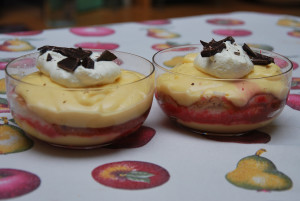
Alchermes (or Alkermes) is the iconic Italian liqueur traditionally used to make Zuppa Inglese, Italy’s answer to the classic English trifle. This vibrant, red Florentine liqueur has a long and fascinating history, and for many Italians its flavour is inseparably linked to one of the country’s most beloved desserts.

Alchermes and Alkermes.. same liqueur , different spelling
Zuppa Inglese and Its Origins

Just as trifle remains a nostalgic favourite in English kitchens, Zuppa Inglese has never gone out of style in parts of Italy. Recently, while enjoying a beautifully made trifle with friends, I was surprised to discover that many seasoned travellers at the table had never tasted its Italian counterpart.

Literally translated as “English soup,” Zuppa Inglese layers sponge biscuits, crema pasticcera (crème anglaise) and liqueur. It is believed to have developed in the late 18th and 19th centuries, possibly introduced by wealthy English visitors living in Italy. The “soup” reference may describe the moist, soaked texture—or may come from the verb inzuppare, meaning “to soak.” Instead of jelly or jam, Italians added something far more characterful: the liqueur Alchermes.

The Story of Alchermes

Alchermes is a strong, ruby-red liqueur originally associated with the Medici family.

The modern Alchermes is likely to be the development of an eighth century tonic which as well as rose-water, cinnamon, sugar and honey, was said to contain ground pearls, leaf gold, raw silk, musk, ambergris (produced in the digestive of system of sperm whales and used in perfumes).

The modern version is simpler but still intensely aromatic, defined by spices, citrus peel and floral notes.

When I was growing up in Trieste in the late 1950s, Zuppa Inglese was a fashionable dessert in many restaurants. Like most Italian families, we rarely baked sweets at home—desserts were purchased from a trusted pasticceria. When we moved to Australia, my mother began making Zuppa Inglese for special occasions, and the tradition has happily continued in my own kitchen.

Zuppa-Inglese-copy-300x201

Making Alchermes at Home

For years Alchermes was difficult to find in Australia. My mother and I substituted Maraschino, which worked well enough, but lacked the intensity of the real thing. Eventually, in the 1980s, I began making my own liqueur using methods similar to Sicilian rosoliu, a traditional homemade infusion dating back to the 15th century.

In Sicily, the ingredients are steeped in alcohol before being sweetened with sugar syrup. My aunt, zia Niluzza, is a master rosoliu maker, and I follow much the same process.

As a Sicilian saying goes:
“Quannu ‘na cosa piaci, nun fa dannu.”
When one likes something, it can’t do any harm.

In Italy, pure grain alcohol is readily available, but in Australia I make Alchermes using vodka or grappa. The quantities below are approximate, as I rarely measure spices precisely.

Homemade Alchermes Recipe
INGREDIENTS
  • 700ml bottle vodka or grappa (use around two-thirds)
  • 3 cinnamon sticks
  • Peel of 1 orange
  • 1 heaped tablespoon each of fennel, cardamom, coriander and cloves, lightly crushed
  • 1 tablespoon mace or nutmeg
  • ½ vanilla bean or a generous pinch of saffron
  • ½ teaspoon cochineal, or more to colour
  • 1 tablespoon rosewater
  • 500g sugar
  • 1 litre boiling water

PROCESS

  1. Place the alcohol and all aromatics except cochineal and rosewater into a wide-mouth jar and seal.
  2. Store in a cool, dark place for at least 14 days.
  3. Dissolve sugar in the hot water and cool.
  4. Add cochineal and rosewater to the syrup.
  5. Pour the syrup into the steeped alcohol.
  6. Strain through cheesecloth.
  7. Bottle and seal. It keeps indefinitely.

Alchermes is available in some specialty wine shops, but at certain times,  I do still like to make my own.

Homemade Alchermes won’t be as brilliant in colour as commercial versions, but the complexity of flavour is incomparable. You can add more Cochineal if you prefer a deeper colour.

Vodka+bot+%25232-250x250
Homemade Alchermes is not the vibrant red colour as the commercially made one

Zuppa Inglese continues to be glorified in my present household.

For Christmas time celebrations, I am often asked to make and bring a trifle. I of course make a  Zuppa Inglese and am often nervous about presenting this variation. But I needn’t worry – is it the Alchermes that does it, and keeps everyone happy.

Great for Birthday celebrations as well.

See: How to make Zuppa Inglese, a famous Italian Dessert.

ZUPPA INGLESE revisited

Marmellata di cigliege (Cherry jam) and Zuppa Inglese

LONG LIVE ZUPPA INGLESE and its sisters

PAPPARDELLE Continued…..

On 26/2/09, Fred wrote:
Dear Marisa,

I read your bit about pappardelle. We had pappardelle sulla 
lepre alla cacciatora at La Pentola dell’Oro in Firenze. It includes cinque cucchiai di aceto rosso ( 5 spoons of red wine vinegar).
 Fred


Dear Fred,
your recipe which includes five spoons of red vinegar does not surprise me. 

There are recipes where the hare, rabbit and boar are soaked in water and vinegar before it is cooked to remove the wild taste – my mother always did this with rabbit. It bleached the meat and left some of the taste. I think that Anglo-Australians soaked wild rabbit in salt water. 

I bought a rabbit at the butcher’s in Greve in December 2008 and was given three parcels, one with the rabbit, the other had the head and the third, the liver – these enrich the sauce. The other variation is the use of herbs – the addition of parsley, sage and rosemary.
There is of course the recipe for hare cooked with bitter chocolate. Now there’s a good taste!

Marisa
Hare recipes:

LEPRE ALLA PIEMONTESE (HARE – SLOW BRAISE PIEDMONTESE STYLE)

HARE or RABBIT COOKED IN CHOCOLATE. Lepre o Coniglio al Cioccolato (‘Nciculattatu is the Sicilian term used)

PAPPARDELLE (Pasta with Hare or game ragù)

WHAT TO DO WITH A ZUCCA (An overgrown zucchini – a marrow).

What to do with those overgrown zucchini?
The easiest thing is to make them into a marinaded salad or a preserve.

Those zucchini grow rapidly and before you know it, they become zucche (plural of zucca,). The marrows I am talking about are no longer than 22 cms, still tender and have flavour – any larger than this they become tasteless and dry and are good for the compost. Usually, zucche are stuffed, but these can also be used successfully to make a salad or a preserve.

I use a mandoline (kitchen utensil used for slicing and cutting) to cut the marrows into matchsticks and then use a method similar to the one for making Italian vegetable preserves.

Sicilians (and southern Italians) are fond of preserves – the most common are made with eggplants or green tomatoes, sliced, salted, squeezed dry (the next day), then placed in vinegar for a day, squeezed dry and finally placed in oil and oregano.

I treat marrows in a similar way, but because I want to eat them fresh it is unnecessary to go through the lengthy process I have described above – the salting process takes about 30 minutes and the rest is completed in no time at all. If I am using zucchini, I slice them long-wise and very thinly (a potato peeler can be good).

The following amounts are for processing 1 marrow…..and not too large or seedy.

INGREDIENTS

marrow, 1

salt, 1 teaspoon

white, wine vinegar, 1 teaspoon

extra virgin olive oil, 1/3cup

oregano, ½teaspoon dried is more pungent,

freshly ground black pepper, to taste

PROCESS

Cut marrow  into half, remove seeds. Cut into match sticks or use a mandoline or a turning slicer which cuts into spirals.

Place in a colander with salt. Leave to drain for at least 30mins. Squeeze dry.

Dress with the oil and vinegar and crushed oregano.

Leave for about 10 minutes for the flavours to infuse.

CIOCCOLATA CALDA (Hot chocolate)


One of my friends is enjoying drinking hot chocolate. She drinks it as genteel ladies once drank it and in a fine cup. It is made the English way with good quality cocoa, water and a dash of milk. 

I too like my hot chocolates unsweetened and made with good quality cocoa. During my many visits to Italy I have ordered many hot chocolates in bars; each one I ordered was different in taste and thickness.

As a child living in Trieste, I grew up with drinking hot chocolate. It was my breakfast, it was drunk at childrens’ parties and at bars while the adults drank coffee. Trieste is close to Austria and the hot chocolate I was used to was always presented in a fine tea cup with a blob of whipped cream. It was always made with a generous quantity of quality cocoa powder and with milk.

Below: Il Caffè degli Specchi in Trieste. 

My mother always made it in a pentolino (we had a special small saucepan that we only used for heating milk) and she would stir the mixture until hot. When in bars the same ingredients were used, but the milk was foamed like in a cappuccino or caffé latte.

I tasted my first, thick hot chocolate when I first went to Mantova. It was almost the consistency of custard. . Those of you who have ordered hot chocolate anywhere north of Rome (except Trieste) would know what I am talking about – milk, sugar, thickening (usually corn flour or potato starch), and chocolate (often cocoa powder).

Places like Torino and Perugia are among the places in Northern Italy that produce fine chocolate so you will find thick chocolate drinks in these towns.

The Baroque city of Modica in southern Sicily is famous for its chocolate made with ancient techniques in the Antica Dolceria Bonajuto, .  In the 1500s when the Spaniards were the rulers they introduced the method from the Aztecs;  the chocolate is often flavoured with cinnamon, vanilla, pistachios and citrus zest. When I had a hot chocolate in the Antica Dolceria Bonajuto, I selected the version that had cinnamon and zest, and it was indeed wonderful.

Below: Modica and Antica Dolceria Bonajuto.

Traditionally, thick chocolate was made in the top of a double boiler, over boiling 
water – good quality, dark chocolate (not cocoa) is melted in water and stirred until it is dissolved. Still over heat, it is then whisked by hand for at least 3 minutes (in a modern kitchen, an electric wand can be used).

Another recipe for making a good tasting, thick, hot chocolate also contains some shaved good quality bittersweet chocolate (high level cocoa-70-80%) as well as the good quality cocoa, milk and sugar to taste (Italians like sugar). In a milk saucepan, mix the sugar and cocoa with a little bit of milk till smooth. Add milk and stir over medium heat. Add the bits of chocolate to taste (and preferred thickness). Keep on stirring till melted.

It can be an alternative to dessert.


PAPPARDELLE (Pasta with Hare or game ragù)

Tuscany and Umbria specialise in sauces for pappardelle made with game meat and I hope that those of you who have visited these regions of Italy were able to eat some when there.

Pappardelle are usually the favourite shape of pasta for strong sauces made with strong tasting meat especially game: either cinghiale (wild boar) lepre (hare), capriolo (venison), coniglio (rabbit), anatra (duck). If not game, maybe salsicce di maiale (pork sausages) or funghi (mushrooms), and preferably the wild ones stronger in taste. Often the pappardelle may have a fluted edge to prevent the sauce dropping away off the sides. These are sometimes called reginette (regina- queen, crowns) but once again, there is local variation in the names.

Pasta shapes are synonymous with certain sauces. Generally, thin sauces which contain a lot of oil (for example made with seafood or with a few vegetables) are better suited to long thin pasta shapes (spaghetti, spaghettini).

Thicker sauces, made with meat or with larger vegetables are better suited to shapes with large, uneven surfaces (rigatoni, penne). Their shapes help to trap the ingredients in the thick sauce.

Pasta shapes are also regional. While the south of Italy may prefer small pasta shapes for thicker sauces (fusilli, casarecci, orecchiette) other parts of Italy enjoy long, flat ribbons of pasta (tagliatelle, fettucine). Fresh ribbon pasta made with a large number of eggs is enhanced by sauces made with delicate subtle flavours, often with cream.

Niluzza rolls pasta_0002 copy

When I was in Tuscany in December 2008, I enjoyed many primi of pappardelle, one in particular in Sansepolcro (very close to Umbria) and the accompanying sauce was made from wild boar and it included pieces of chestnut.

The photograph is of Alex, my small friend: it was taken in Greve. He is outside of the butcher shop (we were staying across the road) and he is patting the stuffed wild boar which decorates the front of the shop. Wild boar is very popular in the winter months in Tuscany but I have also eaten some very fine boar meat in Calabria.

I bought a hare in Greve and cooked it the same way.

Nluzza's ribbon pasta_0136

search

Sauces made with strong tasting meats (wild boar, hare,venison, rabbit, duck) are usually cooked slowly in a ragout (ragù in Italian) and made in the same way as a Bolognese sauce. Because of their rich taste and choice of ingredients they are autumn and winter dishes, most probably enjoyed with a glass or two of red wine.

Sometimes porcini mushrooms are also added to the ragù.

Ragù, using hare, rabbit or boar

Sauté in extra virgin olive oil: ½ onion, 1 carrot, ½ stalk of celery (all cut finely).
Add the hare, rabbit, boar chopped into sections complete with bones and brown (some add pancetta as well). If using sausages leave them whole but prick them, if using mushrooms slice into thick pieces.
Add 1 glass of red wine and evaporate briefly.
Dilute about 2 tablespoons of tomato puree in a little warm water and add to mixture. Stir carefully and add 1 cup of broth, salt, pepper, 3 bay leaves and a little grated nutmeg and simmer until liquid is almost evaporated and the meat is tender and falling off the bone (this could take 2-4 hours for the hare or boar). Continue to check on the liquid and add more as necessary.
Remove bones from the meat and return to the sauce. Some add a little cream and more nutmeg at this stage.
Dress the cooked pappardelle.
Present with grated parmigiano, as a choice for each person.

SPAGHETTI CON PESCE E POMODORINI (Spaghetti with fish and cherry tomatoes)

“It will be maccheroni, I swear to you, that will unite Italy.”

Giuseppe Garibaldi, on liberating Naples in 1860

When eating in Italy, the usual structure of the meal will consist of two courses. Il primo (the first ) will be a soup, risotto or pasta and in Sicily (and in the south of Italy) it is more likely to be pasta

Il secondo (the second) is the main course – the protein component and one contorno (vegetable side dish) or two contorni.

There have always been two courses in my mother’s home, and in the homes of our Italian friends and relatives. Although this is not something that I have continued to observe in my own household, I generally prepare a primo and a secondo when I am cooking for friends. If this is the case, as is the customary practice in Italian homes, nibbles can just be a very simple plate of olives (or the like) and the dessert, fresh fruit.

+pomodorini+DSC_0048

These days, I am into easy recipes, something I can prepare in minutes.

Eating pasta with fish is still not very popular in Australia (at the time of writing) but it is very much so in Italy and of course – Sicily. It is an island after all.

Spaghetti is usually the preferred shape of pasta for fish sauces.

Cherry tomatoes appear to have become very common in restaurants in Italy in the last few years. They are called pomodorini, or cigliegini in Italian and most commonly known as pizzitelli in Sicilian – little things.

Some of the cherry tomatoes in Australia may be small but they lack flavour and sweetness (maybe from over watering if this is possible in Australia). One of my friends in Adelaide is growing a variety called currant tomatoes in pots – very small and sweet and ideal for this dish.

Use any fish which will hold together when you sauté it.

Sicilians prefer tuna or swordfish, but because I like to use sustainable fish (pesce sostenibile) I select Albacore tuna when I can get it, tailor or flathead or snapper and mackerel . To keep the fish moist and to prevent it from overcooking, i keep the fish in large pieces when I cook it and then break it up onto smaller pieces.

From Australia’s Sustainable Seafood Guide by Australian Marine Conservation Society – 2009 (AMCS)

INGREDIENTS

spaghetti, 500g
fish, 500g, cut into dice
garlic, 5 cloves, chopped finely
cherry tomatoes, 1 punnet, if too big cut in half,
extra virgin olive oil, 1 cup
fresh herbs, use either: a handful of basil or parsley, or fresh mint,
white wine, 1 glass
salt and freshly ground pepper (or chilli flakes)
Cook pasta and make sauce as it cooks.
Heat the oil in a frying pan.
Sauté the fish ( you can keep it all in one piece if you wish), add the cherry tomatoes. Remove the fish and tomotoes from the pan but leave the juices in the pan.
Add the white wine and reduce .
Add the herbs and stir through the sauce.
Return the fish and tomatoes to the pan. Separate the fish into the size pieces that you wish.
Drain the pasta and return to the pan where it was cooked.
Mix in the sauce and serve.
Australia:
http://www.marineconservation.org.au