The Great Italian Chefs website is a valuable resource. As part of the Great British Chefs platform, it provides information on various Italian regions and regional recipes. The recipes are prepared by professional chefs and are highly regarded.
I have also posted many of these recipes on my blog. You could compare their recipes with mine.
On the Great Italian Chefs website – 10 best Sicilian Dishes:
I’m often asked about the must-try Sicilian dishes when visiting Sicily—and it’s a question I love answering. Sicily’s cuisine is deeply rooted in its rich history, geography, and vibrant culture. It’s no surprise that food is a key reason people return to the island again and again.
If you’re familiar with the Great British Chefs website (a leading source for professional chef recipes in the UK), you may also know their sister site, Great Italian Chefs. This site celebrates the traditions, creativity, and passion behind Italy’s most iconic culinary offerings.
As they rightly point out:
“The Italians themselves are fiercely passionate about their culinary heritage, and with good reason – a large number of the world’s best dishes come from the cities, fields and shores of this deeply cultural, historic country.”
AND
Today, Sicily is one of Italy’s most popular tourist destinations, and it’s the food that keeps people coming back year after year.
On 29 September 2017, Great Italian Chefs published an article titled “10 Must-Try Dishes When You’re in Sicily.” In fact, there are 11 dishes once you include the one that’s assumed you already know: arancini.
The Sicilian specialties are:
Fritella
Caponata
Raw red prawns
Busiate al pesto trapanese
Pasta con le sarde
Pasta alla norma
Cous cous di pesce
Fritto misto
Involtini di pesce spada
Cannoli
AND
Arancini
Let’s explore these iconic Sicilian specialties—most of which you’ll find recipes for right here on my blog. I’ve included links, photos, and some notes from my cookbook Sicilian Seafood Cooking, with food styling by Fiona Rigg and photography by Graeme Gillies.
Although I have no recipes on my blog for Fritto misto, Raw red prawns and Involtini di pesce spada, I have explained each of these these Sicilian specialties and where appropriate I have links to similar recipes on my blog.
Fritella (Frittedda)
This spring vegetable medley is made with artichokes, broad beans, and peas. It’s lightly cooked and often dressed with olive oil, fresh herbs, and sometimes a splash of vinegar. In Sicilian dialect, it’s called Frittedda.
Caponata is one of Sicily’s most well-known dishes. It’s a sweet and sour eggplant stew made with vinegar, capers, olives, and sometimes pine nuts or even chocolate, depending on the region.
There are several regional variations:
Palermo: Eggplant-focused, sweet and tangy
Catania: More emphasis on tomato and celery
Other versions: Potato-based or with unique local additions
Known as Gambero Rosso (Aristaeomorpha foliacea), these blood-red prawns are a delicacy in Sicily. When fresh, they are served raw with just a drizzle of extra virgin olive oil and lemon juice—simple, elegant, and delicious.
Often, the lemon juice slightly “cooks” the prawns in a style similar to ceviche.
All very fresh seafood can be eaten raw and is loved by Sicilians, usually served with extra virgin olive oil and lemon juice. Most times the seafood is marinaded in these even if it is for a short time – the lemon juice “cooks” the fish.
Busiate al Pesto Trapanese (from Tapani in Western Sicily)
This dish features Busiate, a corkscrew-shaped pasta traditionally hand-rolled around thin rods. It’s served with Pesto Trapanese, a Sicilian version of pesto made from tomatoes, almonds, garlic, and basil. In some regions, it’s also called Matarocco.
Pesto trapanese is also called Matarocco. Busiate is the type of pasta traditionally made by coiling a strip of pasta cut diagonally around a thin rod (like a knitting needle).
One of the island’s most iconic pasta dishes, Pasta con le Sarde is made with wild fennel, sardines, pine nuts, raisins, and saffron. It embodies Sicily’s Arabic and Mediterranean influences.
A Catania favorite, this pasta dish is made with fried eggplant, rich tomato sauce, basil, and grated ricotta salata. It’s hearty and comforting—a must-try for vegetarians and meat-lovers alike.
This North African-influenced dish is popular in Western Sicily, particularly in Trapani. It’s made with semolina couscous steamed and served with a spiced fish broth.
⚠️Note: Unfortunately, the original recipe for Cous Cous di Pesce has disappeared from my blog after a platform migration. I plan to repost it soon.
PESCE CRUDO,RAW FISH IN SICILY, AND THE ISLAND’S FISH MARKETS
Eating raw fish- pesce crudo – is a serious business in Sicily – of course, it is also cooked in many ways.
Pesce Crudo in Sicily
Pesce crudo has long been part of Sicily’s coastal food culture. Fresh fish is treasured on the island and enjoyed in countless ways—grilled, baked, fried, stewed and, increasingly, served raw.
Today, raw seafood appears on menus throughout Sicily, but traditionally it was rarely eaten completely untreated. Instead, it was first marinated in fresh lemon juice before being dressed with extra virgin olive oil. This simple preparation is known as condito in Italian or cunzato in Sicilian, allowing the freshness of the fish to remain the star.
One of the best examples is fresh anchovies. After being cleaned, filleted and trimmed, they are left to marinate in lemon juice for several hours. The acidity of the lemon gently changes the texture of the flesh, a process often described as “cooking” the fish without heat.
In Sicily, these marinated anchovies are sometimes called anchive cotti d’a lumia—anchovies “cooked by the lemon”. Once drained, they need little more than a generous drizzle of excellent extra virgin olive oil to become a perfect antipasto.
Fresh sardines
Beyond Tuna and Swordfish
For generations, tuna and swordfish were the fish most commonly served raw in Sicily, particularly as appetisers. Today, however, Sicilian chefs are embracing a much wider range of seafood.
Influenced by international cuisines and contemporary dining trends, they prepare many varieties of local fish and shellfish as pesce crudo. Yet the philosophy remains unmistakably Sicilian: start with exceptionally fresh seafood and treat it with restraint.
Writing About Sicilian Pesce Crudo
I was commissioned to write an article on Sicily’s pesce crudo for Great British Chefs, a food multimedia company that publishes recipes and other culinary content via its website. Great British Chefs has expanded into Italy with Great Italian Chefs, and the article published on their website is titled PESCE CRUDO.
No matter how beautifully the fish is presented, it all begins with extraordinary ingredients.
Palermo Fish market, swordfish and tuna are among the treasures of Sicily’s fish markets
Sicily’s Fish Markets
One of my greatest pleasures in Sicily is wandering through its fish markets. They are lively, colourful places where fishermen, fishmongers, chefs and local shoppers gather each morning in search of the day’s catch.
Although there are excellent fish markets throughout the island, the famous market beside Piazza del Duomo in Catania is one of Sicily’s finest. The sounds of vendors calling to customers, the scent of the sea and the dazzling displays of seafood create an unforgettable experience.
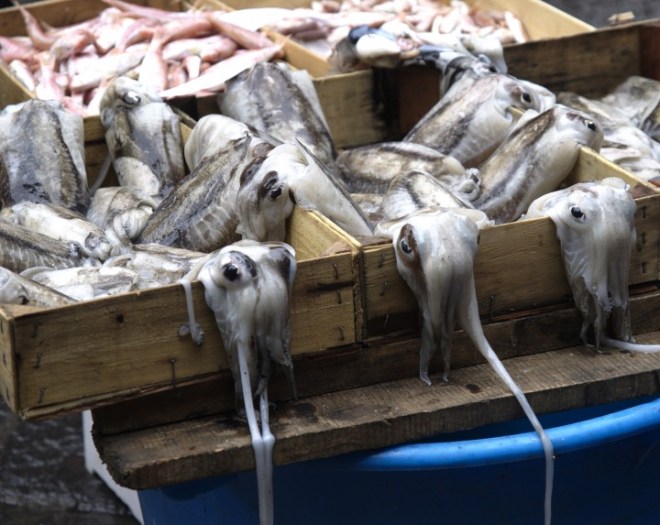
The stalls are filled with remarkable variety—from octopus, squid, cuttlefish and shellfish to sea urchins, edible seaweeds and the celebrated gamberi rossi (Sicilian red prawns). Buckets teem with live seafood, shells glisten in the sunlight and every display reflects the freshness that Sicilian cooks insist upon.
Swordfish and tuna remain the undisputed centrepieces. Whole swordfish are often displayed upright, their long bills pointing skyward, while enormous tuna are expertly broken down before customers’ eyes. Every cut is carefully displayed, reflecting the Sicilian respect for using the whole fish and providing unmistakable proof of its freshness.
Whether you enjoy pesce crudo in a seaside restaurant or prepare it yourself at home, Sicily reminds us that outstanding seafood needs very little embellishment. Freshness, good olive oil, lemon and restraint are often all that is required.
The famous fish market in Catania, where Sicily’s freshest seafood arrives each morning.
I have always enjoyed fish markets in Sicily.
Fresh Squid as sold in Markets in Sicily
This is a small segment from the article PESCE CRUDO:
Walking through the fish markets in Sicily is always a joy; the hustle and bustle of locals seeking out the best produce among the colourful stalls and traders is what makes the island such a charming place. There is more than one fish market in Catania, but the principal market in the southwest of the Cathedral Square is one of the largest in Sicily. However, wherever you are on the island will never be too far from fresh fish.
Sicily’s fish markets have vast, colourful, varied displays of exotic specimens such as sea urchins and edible algae to the more conventional octopus, squid, tuna and swordfish. Small, live fish swim circles in buckets of sea water, snails crawl about and all types of shellfish, especially the gamberi rossi (red prawns of Sicily), look dazzling. You know the fish is fresh – their shells and scales glisten in the sun.
Swordfish and tuna, the traditional staples of Sicilian cuisine, are the centrepieces of the market stalls. They are often displayed whole, the swordfish bill like a spear thrusting upwards. At other times, their massive round carcasses lie like a trunk on the fishmonger’sbench, while the tuna is sliced vertically and horizontally before being filleted along the length of its spine, while all its parts are laid out, testifying to its freshness.
The photos in this article were taken over my numerous trips to Sicily (Thank you also to Bob Evans and Angela Tolley). Some of these photos are in my book Sicilian Seafood Cooking.